Excellence in Modern Facility Management: Mastering Delegation, Visibility, and Talent Development
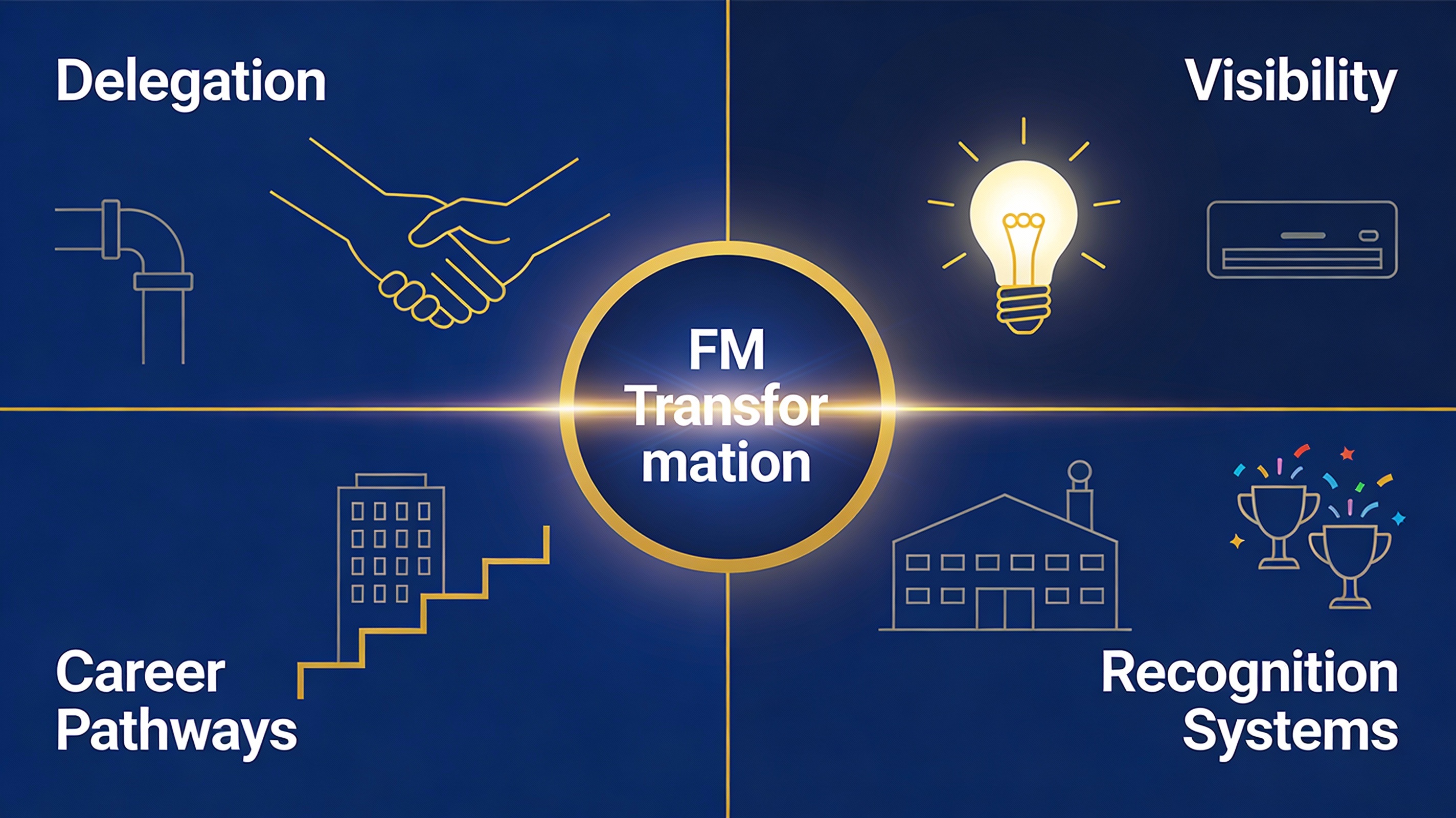
Facility management stands as one of the most underestimated yet critical functions in modern organizations. Every day, facilities professionals orchestrate complex operations that keep buildings functioning, teams safe, and businesses running—yet their work remains largely invisible to those who benefit most from it. This comprehensive exploration reveals the transformative lessons learned through a year of deep engagement with facilities management leadership, uncovering how to shift from burnout-inducing practices to sustainable, growth-oriented leadership models that recognize invisible work, empower teams, and build lasting career pathways.
“If your default setting is ‘fix it myself,’ you’ll fail at delegation, burn out your best people, and starve the middle 30 percent of growth.” — Facility Management Leadership Principle.
The Paradox of Invisibility: Why Facility Work Remains Unseen

The defining characteristic of excellence in facility management is paradoxical: the better the work, the less noticeable it becomes. When maintenance systems function perfectly, occupants don’t celebrate; they simply expect flawless performance. When security protocols prevent incidents, no one notices the crisis that didn’t happen. When sustainability initiatives reduce energy consumption, the impact appears only in spreadsheets, never in headlines. This invisibility creates a profound professional challenge that extends far beyond individual recognition—it threatens the sustainability of the entire facilities management industry.
Facility work remains invisible for structural reasons, not accidental ones. The core responsibilities of facility managers—maintenance, safety, sustainability, operations—are all fundamentally preventive in nature. Success is measured by what doesn’t go wrong, not by visible achievements. This creates a persistent visibility gap where essential work continuously escapes the attention it deserves. Studies examining invisible labor across industries reveal that when work becomes expected, it becomes background noise, regardless of its actual importance to organizational success.
The invisibility challenge extends into the talent pipeline. Career-minded professionals, particularly younger ones considering their future paths, struggle to see facility management as a dynamic, growth-oriented career. The industry faces perception challenges, with facility workoften categorized as maintenance rather than strategic operations. This perception gap directly impacts recruitment, creating barriers to attracting the next generation of facility leaders who might otherwise find meaningful, technically sophisticated work in the field. Linkedin
The Delegation Crisis: From Self-Sabotage to Empowerment

Delegation Skills & Empowerment in the Workplace
Facility managers frequently struggle with a characteristic pattern that undermines both personal sustainability and organizational growth: the “fix it myself” default setting. When leaders default to solving problems personally, they create a paradoxical outcome—they simultaneously burn out their best performers while starving the middle 30 percent of growth opportunities. This delegation crisis represents perhaps the most significant barrier to building sustainable facility management organizations.
The psychological roots of this pattern are understandable. Facility managers often rise through the ranks by being exceptional problem-solvers—the person who reliably fixed issues before they became crises. This identity-forming success pattern becomes deeply embedded. When promoted to leadership, these managers struggle to shift from doing exceptional work to developing others who can do work they find acceptable. The tension between maintaining standards and empowering team members creates decision paralysis that typically resolves in favor of “I’ll do it myself”.
Effective delegation in facility management requires understanding its multi-dimensional nature. Delegation isn’t simply task assignment—it’s a structured process involving three core elements: clear authority transfer that empowers decision-making, explicit responsibility assignment that establishes accountability, and retained managerial accountability that prevents abrogation of leadership duty. When any component is missing or unclear, delegation fails and reinforces the manager’s belief that only they can ensure quality.
The practical framework for successful delegation begins with matching tasks to team members based on capability and development goals, not convenience. Delegation decisions should reflect strategic thinking: Is this task essential to the leader’s role? Does it develop capability in a team member? What guardrails and check-in points ensure quality while preserving autonomy? When facility managers implement this structured approach, they consistently report three outcomes: reduced personal burnout, accelerated development of middle managers, and paradoxically, improved operational quality due to fresh perspectives and broader ownership.
Visibility as a Leadership Strategy: Making Invisible Work Visible

The importance of mentorship for professional growth
Creating visibility for facility management work represents a strategic leadership imperative, not a vanity project. The absence of visibility directly correlates with recognition deficits, which fuel burnout among the most committed employees. Research examining invisible labor across professional contexts demonstrates that when essential work remains unrecognized, organizations disproportionately lose their most collaborative and committed team members—a costly form of attrition that weakens organizational resilience.
Making invisible work visible requires intentional systems and consistent communication. Facility managers can adopt specific visibility strategies that connect daily operations to organizational impact. Documenting preventive maintenance success as risk avoidance, translating energy efficiency improvements into cost savings, and connecting safety protocols to incident prevention all transform invisible work into comprehensible impact. When a facility manager communicates that preventive maintenance scheduling prevented a potential $500,000 equipment failure, the invisible becomes vividly visible.
Strategic visibility also encompasses how facility work is discussed within organizations. Rather than describing maintenance as a cost center, facility leaders should frame maintenance as a strategic asset that enables the organization’s mission. This requires connecting facility metrics to business outcomes, developing visual dashboards that show operational status, and creating channels that recognize facility team contributions alongside sales or revenue-generating functions. When facility leaders change the narrative about the importance of their work, organizational perception shifts.
Peer-to-peer recognition systems amplify visibility particularly effectively in facility operations where managers cannot observe all valuable contributions. These systems empower team members to acknowledge colleagues’ invisible work—such as mentoring younger technicians, solving complex problems, andmaintaining institutional knowledge—that managers might miss. Technology-enabled recognition platforms create scalable systems where multiple employees can instantly highlight and reward contributions, creating an authentic flow of appreciation that traditional top-down recognition struggles to match.
Building Sustainable Career Pathways in Facilities Management

How Can a Mentor Help Your Career?
The facilities management industry faces a critical but addressable challenge: the absence of clear career pathways. Unlike fields where progression is obvious—entry-level developer to senior engineer to architect—facility management career progression remains poorly defined. This ambiguity directly impacts retention. Talented technicians and coordinators reach a ceiling of visibility regarding their future, prompting them to exit toward industries with clearer advancement opportunities.
Strategic career pathway development begins with explicit role definition at multiple levels. Entry-level positions—maintenance technicians, facilities coordinators, administrative assistants—provide hands-on experience essential for understanding operational fundamentals. Mid-level specialization creates branches where professionals can develop expertise in energy management, sustainability, safety compliance, space planning, or contract management. Senior management positions involve strategic planning, budget management, oversight of multiple facilities, and organizational leadership.
Educational partnerships and professional certifications accelerate career development and demonstrate organizational commitment to employee growth. The International Facility Management Association (IFMA) offers the Certified Facilities Manager (CFM) credential, recognized globally, which provides both credentials and structured learning that aligns with career progression. Organizations that support certification training—covering costs, providing study time, recognizing certification achievement—send powerful signals about employee development priorities.
Mentorship programs represent another high-impact career development strategy. Pairing emerging facility leaders with experienced managers creates relationship-based learning that transcends formal training. These relationships provide guidance, professional development opportunities, career navigation support, and the invaluable perspective of someone who has successfully navigated facility management leadership. Organizations establishing formal mentorship programs, creating individual development plans, and providing structured growth opportunities demonstrate commitment to developing future facility leaders from within existing talent pools.
From Burnout to Resilience: Systemic Approaches to Leadership Wellness

How to Build Healthy, Positive and Inclusive Teams at Work
Facility management leadership burnout has become normalized rather than exceptional, despite its corrosive effects on organizational performance and individual wellbeing. The particular vulnerability of facility managers to burnout stems from their role characteristics: responsibility for continuous operations, expectations to respond to emergencies, pressure to maintain standards amid resource constraints, and the absence of visible recognition for preventing crises. Healthyhcl
Burnout prevention requires systemic interventions operating at multiple levels. Individual interventions—stress management techniques, boundary-setting practices, time management optimization—address symptoms but rarely reverse trajectory without systemic support. Organizational burnout prevention requires examining and redesigning work systems that generate stress.
Workload management forms the foundation of burnout prevention. Rather than asking employees to work harder, effective prevention involves strategic workload assessment and rebalancing. This might involve identifying non-essential meetings and eliminating them, removing obsolete processes, delegating lower-priority activities, or adding resources to critical functions. When facility leaders collaborate with teams to identify the highest-priority work and systematically eliminate lower-value activities, they immediately reduce stress and improve focus.
Recognition systems require redesign to acknowledge contributions that traditional metrics miss. Facility teams perform countless acts of invisible labor—mentoring less-experienced technicians, developing creative solutions to complex problems, maintaining institutional knowledge, stabilizing team dynamics during stress—that formal performance systems don’t capture. Creating recognition channels specifically for invisible contributions prevents the demoralization that occurs when essential work consistently goes unacknowledged.
Professional development opportunities simultaneously address burnout and retention. When organizations invest in training, skill-building, certification support, and advancement preparation, employees experience their role as a growth opportunity rather than a static position. Facility leaders should view professional development investment as burnout prevention and retention strategy, not a peripheral benefit.
Core Competencies for Next-Generation Facility Leaders

Inclusive Leadership: 6 Secrets to Better Workplace
The skill requirements for facility management leadership extend well beyond technical facility knowledge. Modern facility managers must develop sophisticated capabilities across multiple domains to create sustainable, high-performing operations. The International Facility Management Association identifies 11 core competencies, but three emerge as particularly critical for current and emerging leaders.
Leadership and strategic thinking represent the first core competency. Facility managers are increasingly expected to think beyond daily operations and contribute to organizational strategy. This requires understanding how facility decisions impact business goals, developing business acumen around costs and value, and thinking systemically about organizational needs. Strategic leadership involves anticipating future challenges, planning capital investments with business impact in mind, and positioning facility operations as enabling the organizational mission rather than merely supporting it.
Communication across multiple stakeholder groups constitutes the second critical competency. Facility leaders must communicate with executive leadership about budget and strategy, with operational teams about daily tasks and development, with vendors about service expectations, and with building occupants about changes and improvements. Effective communication in facility management bridges technical complexity and business language, translating technical solutions into business impact. Leaders proficient in this competency excel at making invisible work visible through clear, compelling communication.
Data-driven decision-making represents the third critical competency for modern facility leadership. Technology integration into facility operations generates increasingly sophisticated data about maintenance needs, energy consumption, space utilization, and operational performance. Facility leaders must develop comfort with data analysis, capability to interpret metrics, and confidence making decisions based on evidence rather than tradition or assumption. This competency transforms facility management from reactive operations to proactive, optimized systems.
Strategic Frameworks for Effective Delegation

The Art of Delegation: How to Empower Your Team | Reclaim
Moving from delegation failure to delegation success requires structured frameworks that address the psychological barriers and practical challenges that make delegation difficult. The clarity principle provides the essential foundation: delegation must begin with clearly defined objectives understood equally by both manager and subordinate. When expectations about what should be achieved, how success will be measured, and what authority the subordinate possesses remain ambiguous, delegation fails.
The principle of authority retention seems contradictory until explained precisely: while a manager delegates authority to make specific decisions, the manager retains ultimate accountability for outcomes. This balance prevents two extremes: micromanagement that discourages initiative, and the absence of oversight that enables failure. Authority retention means ongoing monitoring, regular check-ins, and supportive guidance without controlling daily execution details.
Accountability maintenance ensures delegation strengthens rather than weakens organizational control. Regular performance review, clear metrics for success, and structured feedback mechanisms keep delegated work aligned with organizational standards. The accountability principle operates simultaneously at the level of developing employee responsibility and maintaining organizational governance.
The flexibility principle recognizes that delegation isn’t one-size-fits-all. Different team members require different levels of guidance. Different tasks have different risk profiles. Different situations have different timing requirements. Effective delegation provides flexibility to adjust authority levels, oversight intensity, and supervision based on employee capability, task criticality, and organizational context.
Case Study: Transforming Facility Operations Through Leadership Excellence
The transformation from traditional, hierarchical facility management to modern, inclusive leadership approaches produces measurable organizational benefits. A mid-sized commercial facility operation of 150+ employees exemplifies this transformation. The facility director initially managed operations through tight central control—all maintenance decisions required approval, all purchasing flowed through one person, all vendor interactions occurred at leadership level. Results included reactive operations, limited innovation, high turnover among technical staff, and persistent delays.
Over eighteen months, the leadership introduced systematic delegation, established specialized teams within facility operations, implemented peer recognition systems, and created explicit career development pathways. Technical staff received clear authority for routine maintenance decisions, allowing faster response and problem-solving. A preventive maintenance specialty team emerged, developing enhanced protocols that reduced emergency repairs by 40 percent. Cross-functional teams worked on sustainability initiatives, generating engagement and innovation. Annual turnover among technicians decreased from 35 percent to 12 percent. Most significantly, the organization developed three internal candidates qualified for future leadership positions—a outcome the previous system never achieved.
Making Facility Management Visible: The Recognition Imperative

Team Collaboration in Culturally Diverse Workplaces
Recognition is one of the most underutilized tools for effective facility management leadership. Standard recognition programs typically reward what is readily visible: sales closed, projects completed, targets exceeded. Facility operations don’t generate these linear achievements. Excellence in facility management looks like nothing happening—systems functioning smoothly, problems prevented, crises averted. This invisibility creates a recognition vacuum where the most essential work goes systematically unacknowledged.
The business case for improving facility recognition is compelling. Organizations with recognition gaps for invisible work disproportionately lose their most collaborative employees. These individuals—the mentors, problem-solvers, and team stabilizers—perceive themselves as working hardest yet receiving least recognition. Their departure disproportionately damages organizational culture, spreading demoralization and reducing psychological safety for remaining team members.
Effective recognition systems for facilities operations must be redesigned to capture invisible contributions. Rather than only recognizing individual achievements, systems should acknowledge emotional labor, peer mentoring, problem-solving behind the scenes, and contributions to team functioning. Technology-enabled peer recognition platforms prove particularly effective, allowing team members to nominate colleagues for contributions managers might miss. When recognition flows peer-to-peer in real time, it reflects authentic appreciation and extends beyond formal channels.
Advanced Tools and Technologies Supporting Facility Leadership
Modern facility managers increasingly leverage technology to enhance decision-making, improve communication, and generate visibility for their work. Computerized Maintenance Management Systems (CMMS) and Integrated Workplace Management Systems (IWMS) platforms consolidate facility data into actionable intelligence. These systems track maintenance history, predict maintenance needs, manage vendor relationships, and generate reports demonstrating operational impact.
Building Management Systems (BMS) provide real-time monitoring of facility equipment, energy consumption, and environmental conditions. When integrated with human oversight, BMS data enables proactive intervention, preventive planning, and performance optimization. IoT sensors distributed throughout facilities capture granular operational data, enabling data-driven decisions about resource allocation and strategic planning.
Mobile-first workflow platforms empower technicians with real-time access to work assignments, historical data, and documentation requirements. When field staff can update work status from the site, photograph issues, and access institutional knowledge through mobile applications, they work more efficiently and provide supervisors with current operational status. This technology-enabled transparency supports accountability while respecting worker autonomy.
Developing Future Facilities Management Talent: Educational Partnerships
Building sustainable career pipelines requires deliberate educational partnerships with institutions developing future facility professionals. Organizations benefit from connecting with technical schools offering facility management training, community colleges providing HVAC certification programs, and universities offering facility management degrees. These partnerships enable employers to influence curriculum development, create internship opportunities, and potentially identify emerging talent before they enter the competitive job market.
Apprenticeship programs represent particularly effective talent pipeline investments. By combining classroom learning with on-the-job experience, apprenticeships develop technical skills while socializing newcomers into facility operations. Apprentices who complete programs know organizational systems, have demonstrated capability, and often have already established relationships with teams. This dramatically reduces hiring risk and improves retention compared to external hiring.
Supporting existing employees’ educational advancement through tuition reimbursement, certification sponsorship, and professional development funding signals organizational commitment to career growth. When facility managers can point to colleagues who advanced their careers through formal education with company support, it validates career pathway messaging and motivates team members to pursue similar growth.
The Authenticity Arc: Principles, Process, and Proof in Leadership
Effective facility management leadership follows what might be termed an authenticity arc, progressing from foundational principles through demonstrated process to visible proof of results. This progression builds credibility and inspires followership that positional authority alone cannot achieve.
Principles represent the foundational beliefs guiding facility leadership. Clear articulation of why certain practices matter—why delegation develops people, why recognition matters, why career development benefits the organization—provides the philosophical foundation for leadership approaches. Managers who can explain not just what they do but why they do it create space for team engagement at the level of shared values rather than mere compliance.
Delegation vs. Empowerment Best Practices
Process demonstrates how principles translate into daily practice. Documentation of decision frameworks, explanation of delegation criteria, transparency about recognition processes, and clarity about advancement expectations transform abstract principles into understandable systems. When team members understand not just the outcome but the process that generated it, they develop trust in fairness and consistency.
Proof comes from visible results—both in operational outcomes and in team development. Proof might include technicians who were developed into supervisors, maintenance efficiency improvements resulting from better delegation, turnover reductions from improved recognition, or facility innovations emerging from empowered teams. Proof makes the authenticity arc credible and inspires others to engage with the same approaches.
A Story of Transformation: Learning from a Year of Facility Leadership
In a thriving commercial complex in an urban Indian center, a facility manager named Priya struggled with the familiar crisis. Her team of twelve technicians performed their duties competently, but turnover hovered at 30 percent annually. The best technicians—those with initiative and capability—felt constrained by approval requirements for even routine decisions. Younger staff saw no career path beyond their current roles. Priya found herself working 55-hour weeks, handling every vendor interaction, approving every maintenance decision, essentially doing much of the technical work herself alongside her team. She felt constantly behind, perpetually exhausted, and unable to develop the succession plan her organization increasingly demanded.
Priya’s transformation began with a single realization during a professional development workshop: her commitment to quality was actually preventing team development. Her insistence on doing things herself communicated that she didn’t trust her team, that their contributions weren’t valued, that their growth didn’t matter. The psychological message her behavior sent contradicted her stated values about team development and career opportunity.
Over the following year, Priya systematically restructured how she delegated, managed, and recognized her team. She created explicit decision-making authority for routine maintenance approvals, allowing technicians to make decisions within defined parameters. She established quarterly career conversations with each team member, discussing their aspirations, identifying skill gaps, and co-creating development plans. She implemented a peer recognition system where team members could acknowledge colleagues’ contributions. She connected with local technical schools to establish an apprenticeship program, creating a pipeline for new talent.
The results surprised even Priya’s expectations. Technician initiative increased noticeably. Response times to maintenance requests improved despite Priya’s reduced personal involvement. Three of her senior technicians expressed interest in supervisory roles and began structured preparation. Most significantly, annual turnover dropped to 8 percent, and her team expressed higher engagement in exit interviews of departing colleagues. Priya also recovered her life—working typically 45-hour weeks rather than 55, with genuine time for strategic thinking and professional development rather than constant operational firefighting.
Priya’s transformation reflected the core lessons about facility management leadership: that making invisible work visible, delegating with intention and support, developing careers deliberately, and recognizing contributions authentically creates both better operations and better human experiences.
Creating Your Own Transformation: Actionable Steps Forward
Transforming facility management leadership from burnout-inducing to sustainable requires deliberate steps grounded in research and proven practice. The following framework provides a starting point:
Assess Your Current Delegation Patterns (Week 1-2): For one week, track every decision you make personally. Which decisions could team members handle with appropriate authority? Which reflect genuine leadership responsibility versus outdated practice? Which prevent development opportunities? Use this evidence to identify opportunities for delegation.
Establish Clear Delegation Frameworks (Week 3-4): For your top 5-10 most common decision types, create explicit authority frameworks. Define which decisions individuals at each level can make independently, which require consultation, and which require approval. Document these frameworks and share them with your team. This clarity removes ambiguity and enables confident delegation.
Implement Peer Recognition Systems (Month 2): Identify a platform or process for peer-to-peer recognition. Whether technology-enabled or simple, create a mechanism for team members to acknowledge colleagues’ contributions, particularly invisible work. Promote the system actively for the first month, highlighting different types of contributions worth recognizing.
Develop Explicit Career Pathways (Month 2-3): Map out roles and progression at your facility operation. Define what skills, certifications, or experience each level requires. Have individual conversations with employees about where they currently are, where they might progress, and what development they need. Create written development plans for interested employees.
Evaluate and Optimize Workload (Month 3): Meet with your team to identify work that could be eliminated, reduced, or delegated. Ask what work generates energy and what drains it. Systematically remove or reduce activities that don’t contribute to core facility operations. Redirect time to prevention and strategic work rather than continuous crisis management.
Begin Strategic Communication (Ongoing): Develop new narratives about facility work. Start capturing and communicating the value your operations provide. In staff meetings, leadership communications, and organizational forums, demonstrate how facility operations enable the organizational mission. Make invisible work increasingly visible.
Delegation vs. Empowerment Best Practices
Call to Action: Lead the Transformation
The facilities management field stands at an inflection point. As organizations increasingly recognize that facility operations significantly impact employee wellbeing, sustainability goals, and organizational efficiency, the leadership approaches within facility management will gain prominence and respect. But this transformation requires facility leaders willing to shift how they approach delegation, visibility, career development, and team support.

You have the opportunity to lead this transformation within your organization. You can build a facility operation where invisible work becomes visible, where team members see clear career pathways, where burnout decreases and engagement increases, where the best technicians choose to stay and grow rather than leave for other industries. This transformation doesn’t require massive investment—it requires intention, systems, and commitment.
What one change will you implement this week? Which team member will you have a career conversation with? What invisible work will you make visible this month? Share your insights and commitments in the comments below. The facilities management community is watching leaders like you create the new models that will sustain our industry for the next generation.
“Together, We Keep It Alive”
Words find meaning when hearts stay connected.
If this reflection reached you, your small act of support keeps the light of shared purpose alive.
Please write to us at dinabinamarigold@gmail.com for an invoice, if required.