How Owner’s Representatives Elevate Facility Team Performance
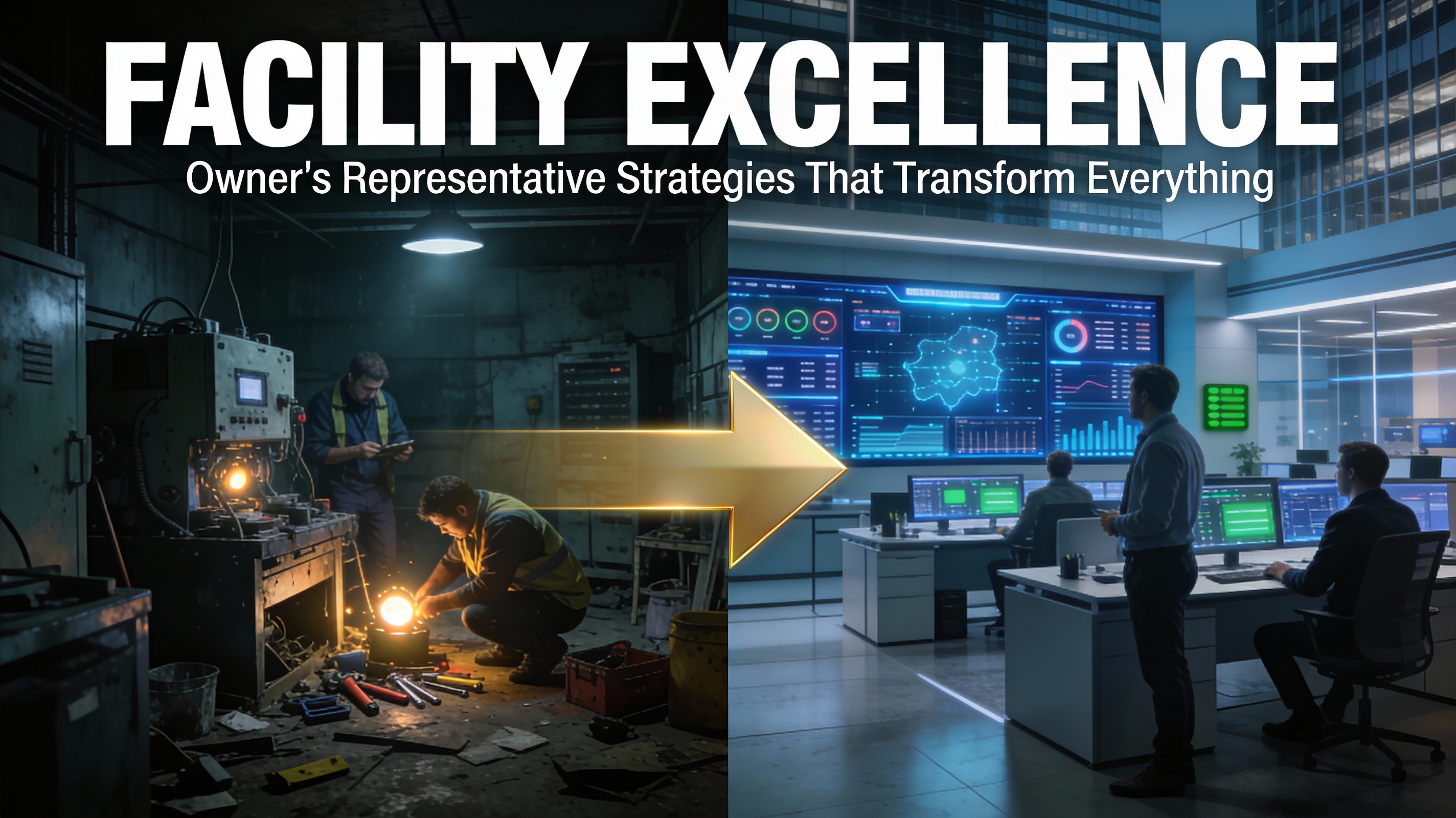
Owner’s representatives serve as the critical bridge between building ownership vision and operational reality, transforming facility management from reactive troubleshooting into a strategic partnership that drives measurable outcomes. When owners actively engage with their facility teams through dedicated representatives, buildings operate with unprecedented efficiency, costs decline significantly, and occupant satisfaction soars. This comprehensive guide reveals how savvy facility leaders unlock dormant potential within their teams by establishing clear communication channels, deploying advanced technologies, implementing preventive strategies, and fostering collaborative cultures that prioritize shared success over individual achievement.
Understanding the Owner’s Representative: Your Strategic Facility Leader
The owner’s representative functions as far more than a passive monitor—they embody the owner’s interests while actively catalyzing improvements across all facility operations. Their role encompasses strategic planning, quality assurance, budget stewardship, risk mitigation, and stakeholder coordination throughout the entire facility lifecycle. This multifaceted position requires a unique blend of technical expertise, business acumen, and interpersonal skills that elevate facility management from a commodity service to a competitive advantage.
Traditional facility management often operates in organizational silos, with maintenance teams, cleaning crews, and security operating independently rather than as a unified force. However, when an owner’s representative orchestrates facility operations, these departments align toward shared objectives, breaking down barriers that typically fragment effort and dilute results. The representative establishes protocols for decision-making, communication, and problem-solving before issues emerge, preventing small oversights from cascading into expensive crises.

A well-implemented owner’s representative structure distinguishes high-performing facilities from mediocre ones through deliberate oversight mechanisms. These professionals develop realistic project schedules using critical path methodology, establish budgets aligned with operational capabilities, and identify potential risks before they materialize. They coordinate designers, contractors, and subcontractors, define stakeholder responsibilities, and maintain essential documentation, creating institutional memory that protects the owner’s interests and enables informed decision-making.
The Communication Foundation: Breaking Silos, Building Alignment
Effective communication forms the bedrock of facility excellence, yet studies show that communication breakdowns are among the most persistent challenges in facility management operations. When facility managers implement structured communication frameworks under an owner’s representative’s guidance, project performance improves dramatically. Research demonstrates that effective communication enhances project decision-making, documentation, and team collaboration, with communication practices explaining 61.1% of variance in project performance.
The owner’s representative establishes multiple communication channels tailored to different stakeholder needs. Email provides formal documentation for policy changes and critical notices. Phone calls enable urgent discussions requiring personal connection. Online portals allow tenants to submit maintenance requests and communicate directly. Mobile applications ensure real-time access to updates and emergency reporting. By offering this diversified approach, owners prevent information bottlenecks while accommodating individual preferences.
Clear communication standards eliminate confusion about response expectations. Setting a 24-hour acknowledgment time for routine issues and a two-hour response time for emergencies creates predictable, professional service while reducing tenant stress. Regular stakeholder meetings—whether weekly coordination sessions or monthly performance reviews—ensure everyone shares current information and understands their responsibilities. The owner’s representative facilitates these sessions, translates technical construction language into accessible terms, and documents action items to maintain accountability across all parties.

Transparency regarding policies, procedures, and financial implications builds foundational trust, enabling smoother interactions. Facility owners who openly discuss property conditions, share maintenance budgets, and explain decisions experience significantly fewer conflicts than those withholding information. This transparency extends to emergency communication planning, ensuring tenants know how to contact facility management in critical situations and what responses to expect.
Strategic Technology Integration: From Reactive Maintenance to Predictive Intelligence
Innovative building technology represents a revolutionary transformation in facility management capabilities, replacing guesswork and reactive crisis management with data-driven intelligence and predictive intervention. IoT sensors continuously monitor temperature, humidity, occupancy, energy consumption, and equipment performance, collecting real-time data that facility managers analyze through sophisticated dashboards. This visibility enables unprecedented optimization of building operations while significantly reducing operational costs.
Predictive maintenance represents smart technology’s most impactful application for facility cost management. Traditional maintenance follows reactive patterns—equipment fails, creating emergency repairs with extended downtime as technicians diagnose problems and source replacement parts. Predictive maintenance identifies equipment showing early signs of wear or malfunction before failures occur, allowing facility managers to schedule repairs during non-disruptive periods. This proactive approach reduces maintenance costs by 12%-18% while increasing equipment lifespan by 10%-20%. One practical example: monitoring HVAC systems for efficiency drops allows technicians to clean coils before refrigerant levels decline by 20%, preventing compressor failure entirely.
Energy optimization represents another critical benefit of smart building technology. Integrated sensors continuously adjust lighting, HVAC systems, and other energy-intensive processes based on real-time occupancy and natural light levels. Buildings implementing smart technology typically reduce energy consumption by 18% and energy costs by 8-15%, translating to substantial operational savings. Automated systems manage lighting and HVAC based on time-of-day occupancy patterns, eliminating waste from systems operating in empty spaces. Facilityexecutive

Advanced analytics transform raw data into actionable intelligence, enabling facility managers to optimize resource allocation and identify inefficiencies before they impact operations. Occupancy sensors identify high-traffic areas, informing cleaning schedules and prioritizing preventive maintenance. Performance benchmarking compares facility operations against industry standards and the best-performing peer buildings, revealing opportunities for improvement. Real-time dashboards provide facility managers with comprehensive visibility into building health, enabling faster decision-making and strategic rather than reactive management.
Preventive Maintenance: The Discipline That Compounds Savings
Preventive maintenance represents facility management’s single highest-return investment strategy, yet many organizations still operate primarily on reactive, emergency-driven models. The distinction between these approaches fundamentally shapes facility costs: reactive maintenance consumes resources chaotically, with emergency repairs consuming premium labor costs, disrupting operations, and often causing secondary damage. Preventive maintenance schedules work during planned downtime, minimize operational disruption, and extend asset longevity dramatically.
Organizations embracing preventive maintenance report stunning returns: 78% of companies implementing structured programs see measurable increases in equipment lifespan. Preventive maintenance also reduces unplanned downtime by enabling facility managers to schedule maintenance at optimal times—after business hours, during maintenance windows, or when building occupancy is naturally low. This scheduling control eliminates the cascading disruptions that characterize emergency repairs.
Successful preventive maintenance begins with asset criticality analysis, focusing initial efforts on equipment where failure most severely impacts operations and revenue. Production-critical assets, single points of failure, and high-value equipment deserve prioritized attention over less critical systems. Facility managers establish manufacturer-recommended maintenance schedules as baselines, then adjust intervals based on operating conditions and historical failure patterns. For HVAC systems, this might include monthly filter replacements, quarterly coil cleaning, semiannual belt inspections, and annual refrigerant level checks—each task helps prevent specific failure modes.

Preventive Maintenance Technician Performing Scheduled Equipment Inspection
Computerized Maintenance Management Systems (CMMS) transform preventive maintenance from an administrative burden into a streamlined operation. These platforms automate PM scheduling, track work order completion, generate data on maintenance patterns, and provide the ROI evidence needed to justify ongoing investment. Mobile-first platforms give frontline technicians tools they actually want to use, reducing training time and improving adoption rates. Implementation typically produces cost recovery within the first year, with many organizations seeing ROI in six months through reduced emergency repairs and extended asset life.
Building Collaborative Partnerships: The Foundation of Facility Excellence
Successful facilities thrive when owners, representatives, managers, and service providers function as integrated teams with aligned goals rather than adversarial parties protecting separate interests. Strategic partnerships rest on five essential principles: industry-specific experience, self-delivery commitment, proactive problem-solving, transparency and open communication, and shared organizational values.
Industry-specific experience ensures facility partners truly understand the unique challenges facing different sectors. Healthcare facilities require sterile environments and rapid responsiveness. Manufacturing plants need reliability and minimal downtime. Educational institutions balance student comfort with budget constraints. Corporate campuses require cutting-edge amenities and efficiency. Partners with deep sector experience speak the owner’s language, anticipate common problems, and deliver solutions tailored to specific operational needs rather than generic best practices.
Self-delivery models, in which facility service providers perform the majority of work with internal personnel, yield superior quality control, consistency, and accountability compared to outsourcing arrangements. In-house teams develop deep facility knowledge over time, understand institutional priorities, and maintain vested interest in long-term performance. They create stronger relationships by building systems and occupants, spotting subtle changes that external contractors might miss.

Proactive problem-solving requires facility partners to anticipate challenges rather than simply responding after problems emerge. Collaborative relationships built on open communication enable partners to discuss concerns early, explore creative solutions together, and prevent issues from escalating. Transparent communication through open-book accounting and regular reporting ensures owners maintain visibility into operations and builds confidence that their interests receive priority attention.
Shared organizational values create the cultural alignment necessary for genuine partnerships. When owners, representatives, and facility providers share a commitment to sustainability, innovation, and integrity, collaboration feels natural rather than forced. These partnerships drive operational excellence, optimize outcomes, and create resilient organizations prepared for future challenges.
Decision-Making Authority: Empowering Through Clear Boundaries
Effective facility management requires timely decisions at appropriate organizational levels, yet unclear authority structures create bottlenecks, duplicate efforts, and deferred accountability. Strong delegation-of-authority (DOA) policies define who has decision-making authority for different categories of decisions, enabling rapid responses while maintaining compliance.
Organizations using centralized DOA structures concentrate decision-making at executive levels, ensuring uniformity but potentially slowing operations. Decentralized approaches empower mid-level managers and regional facility leaders to make decisions within defined scopes, accelerating response times but requiring robust governance frameworks. The most effective structures blend both approaches—centralizing strategic facility decisions while delegating operational decisions to empowered facility managers who understand local conditions.apqc
Successful delegation requires clear communication of decision-making boundaries, authority levels, and escalation procedures. Facility managers need to understand which decisions they can make independently, which require consultation, and which mandate leadership approval. Training ensures employees understand policies and possess the competence to make informed decisions. Organizations engaging senior leadership in DOA governance report significantly higher effectiveness—75% versus 59%—because committed leaders actively support and enforce policies.
Leadership Styles That Elevate Facility Team Performance
The relationship between leadership style and facility team performance fundamentally shapes operational outcomes, yet many facility leaders default to management approaches rather than embracing inspirational leadership. Transformational leadership—characterized by clear vision communication, emotional intelligence, and genuine concern for team member development—produces measurably superior facility outcomes compared to directive or passive management styles.
Transformational facility leaders set clear, compelling objectives that resonate with organizational missions, helping team members connect daily tasks to broader purposes. When maintenance technicians understand how their HVAC inspections support occupant health and productivity, they approach work with greater intention and quality. Leaders who practice transformational approaches empower employees by granting autonomy within defined boundaries, recognizing that trusted professionals perform better than those under close supervision.
Trust forms the cornerstone of high-performing facility teams. Leaders establish trust through consistent communication, transparency about decisions and constraints, modeling desired behaviors, and acknowledging when mistakes occur. Team members who trust their leaders are more likely to share concerns early, suggest improvements, and support colleagues, creating collaborative environments where innovation flourishes.
85% of high-performing facility teams have clearly communicated goals that every member understands and embraces. Leaders must articulate not just what work needs to be accomplished but why it matters to the organization’s success. This clarity enables team members to make aligned decisions without constant supervisory guidance, accelerating response times and improving quality. Regular one-on-one conversations allow leaders to understand individual team member concerns, address discrepancies in perception between leadership and staff, and provide personalized support.
Maximizing Communication Effectiveness in Facility Operations
Communication effectiveness directly predicts facility project success, yet many organizations treat communication as secondary to technical competency. Research analyzing facility management projects in Ghana reveals that clear communication structures, open communication practices, and regular meetings represent key predictors of project success, accounting for 64.2% of variance in communication strategy effectiveness.
Owners should establish communication protocols that address both formal and informal channels. Formal channels might include weekly coordination meetings with agendas and action-item tracking, monthly performance reviews with quantified metrics, and quarterly strategic planning sessions involving ownership and facility leadership. Informal channels—daily check-ins, hallway conversations, and impromptu problem-solving discussions—enable rapid issue resolution and build personal relationships.
Effective facility communication avoids jargon that confuses non-technical stakeholders. Facility professionals discussing HVAC efficiency should translate technical concepts into business terms: “We’re optimizing cooling system performance to reduce summer energy costs by 12%.” This translation helps ownership understand implications while fostering genuine engagement rather than passive acceptance of technical recommendations.
Successful tenant and employee communication requires proactive notification about upcoming work, transparency regarding disruptions, and rapid response to maintenance requests. Buildings that use proactive communication strategies report significantly higher satisfaction than those that communicate only reactively. Advanced notification of renovation schedules, clear explanations of access restrictions, and regular FAQs prevent dozens of individual inquiries and demonstrate professionalism.
Risk Management: Anticipating Challenges Before They Materialize
Experienced owner’s representatives excel at identifying potential risks early in facility projects, developing contingency plans, and maintaining stakeholder alignment when challenges emerge. Risk identification begins during pre-project planning, examining factors such as site conditions, material availability, weather patterns, labor availability, and regulatory requirements that may affect timelines or budgets.
Risk quantification involves assessing both the probability and impact of identified risks, enabling facility managers to prioritize high-impact items while accepting acceptable levels of lower-impact risks. A potential shortage of qualified HVAC technicians (high probability, medium impact) might warrant early recruitment efforts and relationship building with contractors. The possibility of unexpected soil conditions during construction (lower-probability, high-impact) might justify geotechnical surveys and contingency budget allocation.
Proactive risk mitigation develops strategies before problems occur. For regulatory risks, staying current on code changes and maintaining compliance documentation is essential. For supply chain risks, developing relationships with backup suppliers and pre-qualifying alternatives. For operational risks, cross-train staff so that no single person is a critical path dependency. By proactively addressing risks, facility managers prevent expensive change orders, costly delays, and quality issues that damage owner relationships.
Creating Accountability Through Documentation and Oversight
Detailed project documentation creates institutional memory while enabling accountability across all facility management activities. Comprehensive records should include correspondence between parties, contract documents, change order documentation, inspection reports, testing results, and maintenance histories. This documentation proves invaluable when disputes arise, enabling facility managers to reference specific communications, requirements, and decisions that led to particular outcomes.spireconsultinggroup
Regular site inspections and activity logs maintain continuous visibility into work quality and progress. Facility managers should document not just what they observed but what prompted observations and what actions resulted. This record-keeping demonstrates diligence while creating clear evidence that the owner’s representative actively oversaw the work rather than passively accepting contractor reports. Monitoring project budgets against initial estimates and comparing actual timelines against schedules reveals trends early—a schedule that slips two weeks in month two typically indicates problems requiring intervention before they compound. Spireconsultinggroup
Detailed punch list verification before final payments protects the owner’s interests while ensuring occupants receive fully completed facilities. Outstanding items should receive documented corrective work before final payment, with photographic evidence confirming satisfactory completion. This meticulous approach may seem tedious, but it prevents occupants from discovering incomplete work weeks or months after projects conclude, requiring expensive recalls and eroding confidence in facility management.
Real-World Application: Integration of Principles
A healthcare facility leader implemented comprehensive owner’s representative practices and achieved remarkable outcomes. Previously, maintenance operated reactively—when equipment failed, technicians responded with emergency repairs, incurring premium labor costs and disrupting patient care. The facility lacked systematic communication between clinical and facilities teams, resulting in maintenance work scheduled without coordination for clinical workflows.
The owner’s representative established preventive maintenance protocols prioritizing critical equipment—HVAC systems, emergency generators, sterile processing equipment—with manufacturer-recommended schedules adjusted based on operating conditions. Smart building sensors enabled predictive maintenance, alerting technicians to system inefficiencies before equipment failed. Communication improvements included weekly facilities-clinical coordination meetings where clinical staff flagged upcoming busy periods and maintenance teams scheduled non-urgent work accordingly.
Within 18 months, emergency repair calls decreased 67%, planned downtime increased from near-zero to 40% of total maintenance (indicating healthy prevention), and equipment lifespan extended by 3-5 years. Facility costs declined 22% while service quality improved dramatically, with clinical staff reporting unprecedented responsiveness. The facility’s reputation for reliability became a recruitment advantage, attracting clinical talent who valued predictable operational environments.
Embracing Change: Adaptability as Competitive Advantage
Facilities operate in dynamic environments where regulations shift, technologies advance, occupancy patterns change, and unexpected challenges emerge. Successful owner’s representatives build adaptable facility teams capable of responding effectively to evolving circumstances. Adaptability begins with psychological safety—team members must feel secure proposing alternatives and admitting when approaches aren’t working without fear of blame.
Cross-training represents a practical manifestation of adaptable thinking. When one FM team experienced a sudden staff shortage due to illness, cross-training enabled team members to step in, ensuring service delivery continued without significant disruptions. This preparation took time upfront but delivered immediate value when challenges emerged. Flexible working practices—enabling remote support for some functions, adjusting schedules to accommodate individual circumstances—improve retention while building goodwill that generates superior performance during crises.
Continuous improvement processes—regular review of what’s working, honest discussion of failures, and iterative refinement of approaches—create organizations that strengthen through experience rather than repeating mistakes. Psychological safety must extend to failure: high-performing teams view failures as learning opportunities rather than career-threatening events.
Conclusion: Transforming Facility Management Through Strategic Leadership
Owner’s representatives who effectively engage with facility teams unlock organizational potential that passively managed facilities never access. This transformation requires establishing clear communication frameworks that break down organizational silos, implementing technology that converts building data into actionable intelligence, committing to preventive maintenance disciplines that compound savings, and cultivating collaborative partnerships based on shared values and mutual success.
The evidence is overwhelming: facilities managed through dedicated owner’s representatives, empowered managers, and engaged teams outperform those operating through traditional hierarchical command-and-control structures. Communication improves, costs decline, quality rises, and occupant satisfaction soars. The investment required—dedicated leadership attention, clear protocols, and a commitment to continuous improvement—pales in comparison to the operational excellence it enables.
Most assets don’t fail suddenly.
They warn you quietly—if you’re listening.
Your facility’s greatest asset isn’t the building itself—it’s the people and systems managing it. By implementing the principles outlined throughout this guide, you transform facility management from background operations that attract attention only when problems occur into strategic advantages that strengthen competitive positioning. Excellence in facility management demonstrates an organization’s commitment to occupant welfare, operational efficiency, and sustainable practices while building its reputation and attracting talent. The choice to elevate facility performance through strategic ownership and engaged leadership yields returns that extend far beyond reduced maintenance costs into enhanced organizational success.
FACILITY MANAGER STRESS CRISIS
-
Sale!

PLR Profits
Private Label Rights (PLR) products are digital goods that can…
$35.00Original price was: $35.00.$2.00Current price is: $2.00.Rated 0 out of 5 -
Sale!

A Guide to Creating Images from Text Using Midjourney AI
Discover the transformative capabilities of Midjourney AI in converting text…
$25.00Original price was: $25.00.$3.00Current price is: $3.00.Rated 0 out of 5 -
Sale!

The Affiliate Master Course
1. Learn the secrets of affiliate marketing from beginner to…
$10.00Original price was: $10.00.$2.00Current price is: $2.00.Rated 0 out of 5
“Together, We Keep It Alive”
Words find meaning when hearts stay connected.
If this reflection reached you, your small act of support keeps the light of shared purpose alive.
Please write to us at dinabinamarigold@gmail.com for an invoice, if required.