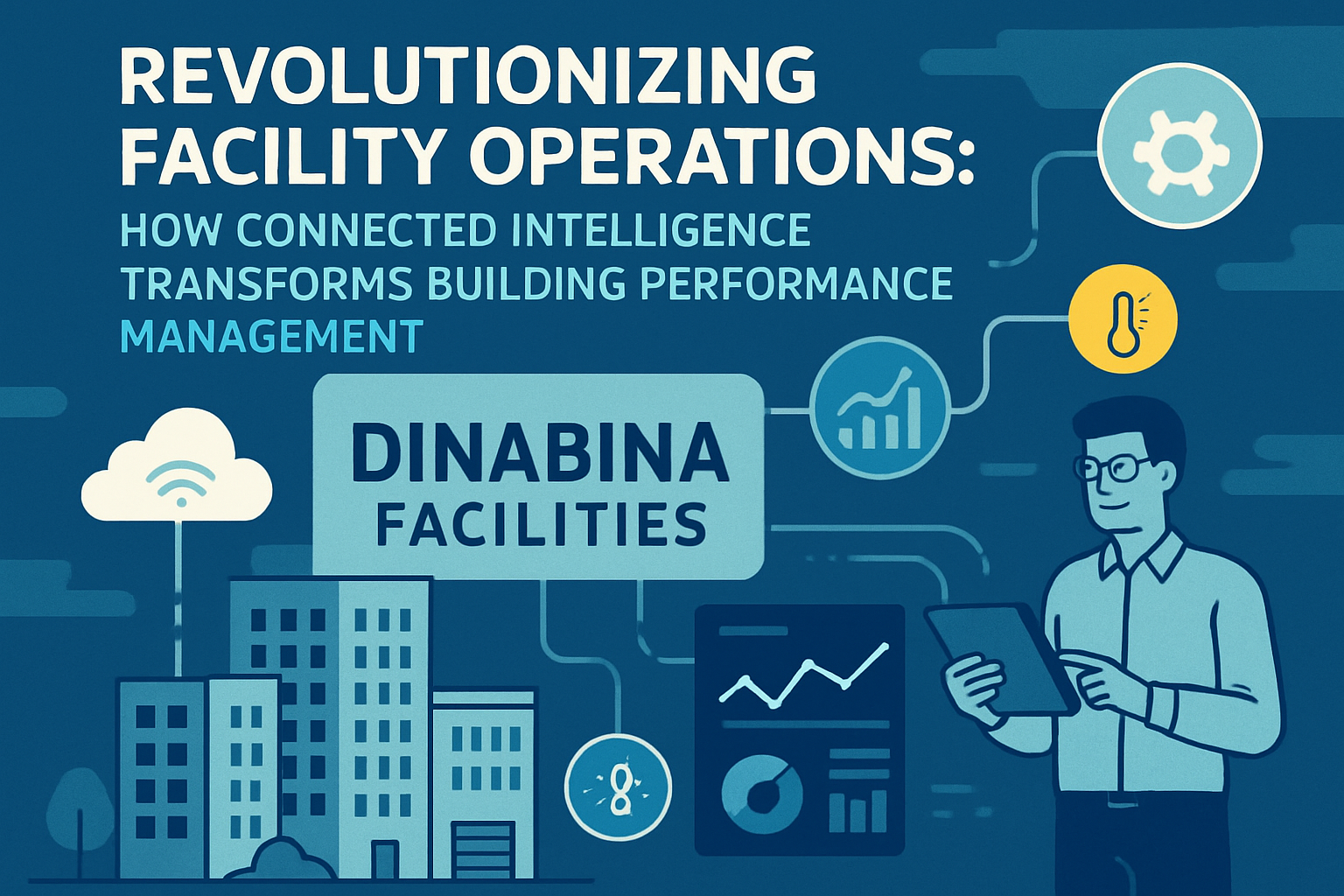


Revolutionizing Facility Operations: How Connected Intelligence Transforms Building Performance Management
Buildings no longer stand as passive structures. They breathe, learn, and adapt. Connected sensor networks merge with intelligent maintenance platforms to create ecosystems that anticipate failures before they occur, slash energy waste, and redefine what “smart” truly means.ieeexplore.ieee
The transformation sweeping through facility management stems from a powerful convergence: Internet of Things devices capturing real-time operational data, paired with Computerized Maintenance Management Systems that turn raw information into strategic action. This synergy represents more than incremental improvement—it signals a fundamental reimagining of how buildings operate, maintain themselves, and serve occupants.

Tablet displaying smart building environmental controls with IoT sensor data and analytics for efficient management neuroject
The Intelligent Building Revolution: Beyond Brick and Mortar
Modern structures transcend their physical boundaries. Sensor arrays embedded throughout facilities create digital nervous systems that monitor everything from air quality to equipment vibration. These IoT networks generate continuous data streams, feeding analytics platforms that identify patterns invisible to human observation.
The global smart building market reached $103 billion in 2024 and races toward $827.7 billion by 2034—a staggering 24.4% compound annual growth rate. This explosive expansion reflects urgent demands for energy efficiency, operational excellence, and sustainability.sensgreen
Buildings consume 40% of global energy and generate 33% of greenhouse gas emissions. Smart technologies offer pathways to dramatic reductions. Organizations implementing IoT-enabled building systems achieve energy savings up to 30% while cutting operating expenses by 20%.mdpi+4
Traditional maintenance models collapse under modern complexity. Reactive approaches where teams fix equipment only after failures create costly disruptions. Scheduled preventive maintenance often performs unnecessary work or misses critical issues. The answer lies in predictive intelligence.codasol limblecmms

Predictive maintenance dashboard showing key metrics and cost analysis for a Cake Donuts production line limblecmms
Predictive Maintenance: The Cornerstone of Operational Excellence
Predictive maintenance revolutionizes equipment management by forecasting failures before they occur. IoT sensors continuously monitor critical parameters—temperature, vibration, pressure, humidity—analyzing patterns to detect early warning signs.coram
The predictive maintenance market exploded from $6.9 billion in 2021 to a projected $28.2 billion by 2026. This growth stems from proven results: 83% of implementations deliver positive ROI, with 45% achieving payback within one year.iot-analytics
Transformative Benefits Organizations Experience
Early Fault Detection: Sensors identify equipment degradation days or weeks before catastrophic failure. One food processing facility installed vibration and tension sensors on aging conveyor systems, predicting belt failures days in advance. Within six months, they avoided three major breakdowns, saving $150,000 in lost production and emergency repairs.
Downtime Elimination: Predictive approaches reduce unplanned downtime by 30-50%. A medium-sized factory experiencing 40 hours monthly of unexpected stoppages cut that by 20 hours—saving $1.2 million annually at $5,000 per hour downtime cost.
Maintenance Cost Reduction: Precise intervention timing slashes maintenance expenses by 20-50%. Organizations eliminate unnecessary preventive tasks while addressing genuine issues before they escalate.
Extended Equipment Life: Proactive maintenance extends asset lifespans by 20-40%. Studies show predictive programs reduce equipment failures by up to 90%, nearly eliminating unexpected breakdowns.
Reduced Mean Time to Repair: Automated diagnostics cut repair times by 60%. Technicians receive specific fault information rather than conducting time-consuming investigations.

Key components of smart building systems including sensors, networking, control devices, software platforms, and HVAC systems
CMMS Platforms: The Central Nervous System
Computerized Maintenance Management Systems serve as control centers orchestrating maintenance operations. Modern CMMS platforms aggregate data from IoT sensors, historical records, and operator inputs, transforming fragmented information into actionable intelligence
Core Capabilities Driving Success
Centralized Data Management: CMMS platforms create unified operational views. The City of Savage migrated 400 asset records into their CMMS within one week, replacing index cards and spreadsheets. This consolidation enabled instant audit reports answering budget questions with line-by-line precision.
Automated Work Order Generation: When sensor thresholds breach, systems automatically create work orders and reserve spare parts. Red Cedar Gathering, a natural gas company, achieved 99% uptime by automating responses to temperature and pressure anomalies.
Predictive Analytics Integration: Advanced CMMS solutions incorporate AI and machine learning algorithms that continuously improve failure predictions. These systems analyze historical patterns alongside real-time data, refining accuracy over time.clickmaint+1
Mobile Field Access: Technicians access and update records directly from equipment locations. Field teams log completed tasks, upload photos, and capture condition data in real-time, eliminating transcription errors and delays.
Inventory Optimization: Real-time tracking with automated reorder points balances availability against cost control. SunnyD manufacturing plants reduced MRO inventory by 50% without risking shortages, while cutting mean time to repair by 26%.

Maintenance dashboards showing reactive vs preventive tasks and maintenance cost breakdown over time clickmaint
Real-World Transformations: Proof in Performance
Manufacturing Excellence: SunnyD’s Journey
SunnyD operates five North American beverage manufacturing plants under strict OSHA and Food Safety Modernization Act compliance. Unplanned downtime risked ingredient spoilage and costly production halts.
Their CMMS+ implementation provided real-time asset visibility down to shelf-level with 3D views. Rules-based systems triggered proactive work orders based on machine usage and IoT data. Integration with enterprise resource planning automated purchase requests, ensuring parts arrived precisely when needed.
Results: 26% reduction in mean time to repair, 50% inventory reduction, and cultural shift from reactive to proactive maintenance. Compliance documentation became effortless during audits.llumin
Municipal Operations: City of Savage Transformation
The City of Savage’s utility services department managed 2,100 assets and 10,500 water meters using index cards and spreadsheets. This approach created vulnerability to missed preventive tasks and limited visibility into asset health.
CMMS deployment migrated 400 asset records within one week. Predictive alerts surfaced maintenance needs ahead of failures. Water meters tagged with parcel IDs integrated with billing systems for real-time accuracy.llumin
Impact: Transition from reactive repairs to planned preventive maintenance reduced emergency call-outs and improved resource allocation. Audit-ready reporting gave city leaders data to answer stakeholder questions precisely.lluminlimblecmms

Customizable maintenance dashboards in Limble CMMS show real-time metrics like tasks, parts consumed, and time spent to optimize facility management limblecmms
Energy Sector Success: Red Cedar Gathering
Red Cedar Gathering processes natural gas from 1,200 wells through compressor networks and treatment facilities. Compressor failures disrupted throughput and triggered costly emergency responses at remote stations. Manual data logging slowed diagnosis and made prediction impossible.
Integration pulled real-time temperature and pressure data from control systems into CMMS. Automated work orders activated whenever thresholds breached. Visual asset dashboards with photos and schematics enabled precise, speedy issue resolution.
Outcomes: Uptime rose above 99% with sharply reduced mean time to repair. Labor hours fell as automated condition monitoring replaced manual inspections. Full ROI achieved within two years through fewer emergency call-outs and avoided downtime.
Global Smart Building Examples
The Edge, Amsterdam: This net-zero building generates 100% of energy from renewable sources, primarily solar panels. BIM visualization optimizes energy efficiency and monitors maintenance issues. The structure’s passive design features—load-bearing concrete walls as thermal mass—minimize heating requirements.
Burj Khalifa, Dubai: The world’s tallest building implemented Honeywell’s IoT platform receiving real-time data from building automation systems. Smart algorithms spot anomalies and maintenance issues, enabling facility managers to increase asset reliability. This system reduced total maintenance hours by 40%.
Capital Tower, Singapore: HVAC systems feature wheels recovering cool air to maintain chiller temperature, reducing heating and cooling energy. IoT sensors measure air temperature, humidity, and CO2 levels ensuring occupant safety and comfort. Carbon monoxide sensors in garages trigger exhaust fans when dangerous levels detected.

Isometric infographic showing various IoT-connected smart home devices used in building automation and smart building maintenance
Energy Efficiency: The Sustainability Imperative
Buildings consume 40% of global energy, 25% of water, and generate one-third of greenhouse gas emissions. Without intervention, building sector energy demand could increase 30% by 2060—equivalent to all energy used by US, EU, and China households in 2015.
Smart building systems address this crisis through multiple mechanisms:
Real-Time Energy Monitoring: IoT sensors track consumption patterns identifying inefficiencies. Facilities managers pinpoint erratic usage areas, enabling targeted optimization.
Automated System Adjustments: Smart buildings automatically adjust lighting and HVAC based on occupancy and environmental conditions. Occupancy sensors turn off lights in unattended spaces. Systems adjust brightness based on daylight availability. HVAC automatically modulates airflow and temperature.
Predictive Analytics for Energy Optimization: Historical and real-time data analysis forecasts future energy needs and behaviors. Predictive models determine optimal heating and cooling times based on usage patterns, weather forecasts, and electricity rates. This cuts energy costs while extending equipment lifespan through reduced wear.
Data-Driven Insights: Analysis of vast data volumes provides actionable recommendations for continuous improvement. Organizations identify defective equipment drawing abnormal energy, enabling targeted repairs.
Measured Impact: Organizations implementing smart building technologies achieve energy cost reductions of 15-30%, typically paying for themselves within 2-5 years. More sophisticated implementations demonstrate savings up to 36.8 kW hourly.

Illustration of an intelligent building energy management system showing integrated HVAC, lighting, security, and energy systems
Digital Twins: Virtual Replicas Driving Physical Excellence
Digital twin technology creates dynamic virtual replicas of physical buildings, continuously updated with real-time data from sensors, equipment logs, and building systems. Unlike static BIM models, digital twins evolve alongside their physical counterparts, enabling simulation, analysis, and optimization throughout building lifecycles.
Digital Twin Capabilities in 2025
Energy Monitoring and HVAC Optimization: Platforms monitor and simulate energy usage patterns, occupant movement, space utilization, and equipment performance. Systems predict optimal maintenance schedules and retrofit planning.
Predictive Maintenance Enablement: Digital twins alert facility teams to critical equipment needing attention before failures occur. Continuous monitoring identifies performance degradation early.
Lifecycle Cost Analysis: Virtual models simulate intervention scenarios, comparing different approaches before physical implementation. Organizations evaluate energy improvements, construction costs, and lifecycle benefits.
Emergency Scenario Simulation: Digital twins model fires, evacuations, and other emergency situations, informing response planning.
Market Growth: Digital twin implementation can achieve energy savings up to 30% while reducing operational costs and improving maintenance strategies. Their impact proves particularly notable in smart buildings, manufacturing, and industrial processes where real-time analytics contribute to superior energy management.
Enabling Technologies Integration
Digital twins require convergence of multiple technologies:
IoT Sensors: Foundation for real-time data collection monitoring environmental conditions, equipment status, and occupant behavior.
Building Information Modeling: Provides precise structural and spatial data forming the digital model foundation. BIM integration enables virtual design and construction models, capturing changes across design phases.
Artificial Intelligence: Adds predictive intelligence by analyzing large datasets for patterns. AI enables risk mitigation strategies, supports intelligent decision-making, and enables adaptive simulations and forecasting.
Cloud Computing: Facilitates data storage, processing, and accessibility across stakeholder groups.

Energy management system in smart buildings using renewable sources and game theory-based energy sharing scenarios
Overcoming Implementation Challenges
Despite compelling benefits, smart building adoption faces barriers requiring strategic approaches.
Cost Considerations
High Initial Investment: Smart building system installation costs represent significant capital expenditures. Integration expenses increase when retrofitting existing structures lacking necessary infrastructure.
Strategic Response: Organizations should calculate lifecycle costs rather than initial outlays. IoT-based solutions typically achieve ROI within 12-18 months, substantially faster than traditional building management systems requiring 3-5 years. Predictive maintenance implementations deliver positive ROI in 83% of cases, with 45% achieving payback under one year.
Technical Complexity
System Integration Difficulties: Compatibility issues, conflicting protocols, and centralized management requirements complicate implementation. Scaling and flexibility challenges emerge as operations grow more sophisticated.
Mitigation Strategies: Select platforms offering OEM and device-agnostic compatibility. Modern IoT architectures employ distributed approaches where controllers independently connect to internet and communicate with cloud servers, simplifying deployment and management. Engage specialists with integration experience to navigate complexity.
Skills and Knowledge Gaps
Specialized Personnel Requirements: Smart technologies demand specific expertise for project, construction, operation, and maintenance management. Teams must manage large data volumes and control energy systems.
Workforce Development: Implement comprehensive training programs covering system navigation, work order creation, preventive maintenance tasks, and reporting. Younger staff often adapt quickly to platforms, using predictive analytics to support budget planning and decision-making.
Data Security and Privacy
Cybersecurity Concerns: Connected devices and cloud-based systems create potential targets for cyberattacks. Data security, privacy, integrity, and availability represent top concerns.
Protection Measures: Implement advanced encryption and proactive threat detection. Deploy AI-driven security systems offering real-time monitoring of network activity ensuring vulnerabilities addressed before problems emerge. Establish robust data governance frameworks complying with regulations like GDPR and CCPA.
Organizational Resistance
Change Management Challenges: Teams may resist technologies, materials, and processes differing from traditional practices. Behavioral issues including communication gaps and conflicts of interest can impact implementation.
Cultural Transformation: Begin with pilot projects demonstrating value before full deployment. Involve stakeholders early in planning to address concerns and build buy-in. Emphasize benefits including reduced emergency work, improved efficiency, and safer working environments.
Future Horizons: Emerging Trends Reshaping Buildings
The convergence of AI, IoT, and advanced analytics accelerates smart building evolution.
Artificial Intelligence Proliferation
AI-Driven Automation: Machine learning algorithms optimize HVAC systems adapting to occupancy patterns and weather conditions. Predictive models forecast energy needs enabling informed procurement strategies.
Autonomous Operations: AI-integrated systems analyze internal and external data points making accurate predictions about built environments. HVAC systems operate at optimal efficiency without human intervention, reducing costs while ensuring maximum comfort.
Continuous Learning: AI-powered platforms continuously improve with new data, adapting to changing usage patterns and occupant needs. Systems identify trends and uncover optimization opportunities over time.
Advanced Connectivity
5G and Wireless Technologies: Next-generation networks enable real-time monitoring and control from anywhere. Enhanced bandwidth supports increased sensor deployments and data transmission.
Edge Computing: Processing data closer to sources reduces latency and enables faster responses. Edge systems perform initial analysis before sending refined information to cloud platforms.
Enhanced Occupant Experience
Personalized Environments: Systems adjust lighting, temperature, and ventilation based on individual preferences and occupancy patterns. Spaces adapt intelligently to human needs rather than following rigid schedules.
Space Utilization Analytics: Occupancy sensors and desk booking software optimize workspace usage in hybrid work environments. Organizations maximize space efficiency while reducing energy consumption in unused areas.
Sustainability Focus
Net-Zero Buildings: Structures generate energy equivalent to consumption through renewable sources. Solar panels, wind turbines, and geothermal systems integrated with smart management platforms balance production and usage.
Carbon Footprint Tracking: Real-time monitoring of energy consumption, waste production, and resource usage supports ESG (Environmental, Social, Governance) goals. Organizations demonstrate commitment to sustainability through transparent reporting.
Circular Economy Integration: Smart systems optimize material usage, facilitate recycling, and extend product lifecycles through superior maintenance.
Actionable Implementation Roadmap
Organizations seeking to harness connected intelligence should follow structured approaches:llumin+2
Phase 1: Assessment and Planning (Weeks 1-4)
Conduct Comprehensive Needs Analysis: Identify current maintenance challenges, benchmark existing practices, and define success metrics. Determine pain points including downtime frequency, maintenance costs, and energy inefficiency.
Assemble Cross-Functional Team: Include facility managers, maintenance technicians, IT specialists, and finance representatives. Ensure stakeholder buy-in from leadership level.
Evaluate Solution Options: Research CMMS and IoT platforms considering scalability, integration capabilities, mobile access, and vendor support. Request demonstrations and reference customers.
Phase 2: Data Preparation and System Configuration (Weeks 5-12)
Data Collection and Migration: Gather equipment lists, maintenance histories, and parts inventories. Clean data removing duplicates and correcting errors. Archive obsolete records.
System Customization: Configure asset hierarchies, maintenance task templates, and schedules. Establish user roles and permissions. Customize data fields matching organizational workflows.
Integration Planning: Map connections between CMMS and existing systems including ERP, asset management, and building automation platforms.
Phase 3: Pilot Testing (Weeks 13-20)
Limited Deployment: Implement system with select teams or facilities. Monitor performance closely identifying issues requiring adjustment.
Gather Feedback: Collect input from pilot users about functionality, ease of use, and missing features. Iterate based on learnings.
Measure Results: Track KPIs including work order completion rates, downtime reduction, and inventory accuracy. Compare against baseline metrics.
Phase 4: Full Deployment and Training (Weeks 21-32)
Comprehensive Training Programs: Deliver role-specific instruction covering system navigation, work order management, preventive maintenance scheduling, inventory control, and reporting. Provide hands-on practice and reference materials.
Phased Rollout: Deploy across departments or locations incrementally rather than simultaneously. Maintain support resources during transition periods.
Change Management: Communicate benefits consistently, celebrate early wins, and address resistance promptly. Establish champions who advocate for new approaches.
Phase 5: Optimization and Continuous Improvement (Ongoing)
Monitor Performance: Track equipment uptime, maintenance costs, energy consumption, and user satisfaction. Generate regular reports for leadership review.
Refine Processes: Adjust maintenance schedules based on predictive analytics insights. Optimize inventory levels using historical consumption data. Update work procedures reflecting lessons learned.
Expand Capabilities: Integrate additional sensors and systems as value demonstrated. Explore advanced features including AI-driven diagnostics and digital twin implementation.
Strategic Recommendations for Maximum Impact
Organizations maximizing smart building benefits should prioritize specific actions:
Start with High-Impact Assets: Focus initial deployments on critical equipment where failures cause significant disruptions. Demonstrate value quickly building momentum for broader adoption.
Emphasize Energy Efficiency: Building owners and operators should invest in AI-driven software optimizing HVAC, lighting, and equipment based on real-time occupancy, weather, and usage patterns. Comply with sustainability standards like LEED to attract environmentally conscious tenants and meet regulatory requirements.
Link IoT to Practical Applications: Avoid IoT becoming self-perpetuating data gathering without clear business goals. Connect sensor networks to specific use cases like predictive maintenance, energy management, or security enhancement.
Ensure Data Quality: Poor data undermines analytics and predictions. Establish protocols for sensor calibration, data validation, and error correction. Recognize that data quality represents critical importance for successful outcomes.
Plan for Scalability: Design systems accommodating growth in assets, locations, and users. Select platforms offering modular architecture enabling feature addition without disrupting operations.
Measure and Communicate ROI: Calculate savings from reduced downtime, lower maintenance costs, and energy efficiency. Share results with stakeholders demonstrating value and justifying continued investment.blogs.
Conclusion: The Imperative of Transformation
The convergence of IoT sensors and CMMS platforms represents more than technological upgrade—it embodies fundamental reimagining of building operations, maintenance, and performance. Organizations embracing connected intelligence achieve dramatic improvements in efficiency, sustainability, and occupant satisfaction.
The evidence proves compelling: 83% of predictive maintenance implementations deliver positive ROI, with nearly half achieving payback within one year. Energy savings reach 30%, operating expenses drop 20%, and equipment lifecycles extend 20-40%. Unplanned downtime plummets 30-50%, while maintenance costs fall by similar margins.
The question facing facility managers, building owners, and organizational leaders shifts from “Should we implement smart building technologies?” to “How quickly can we realize these transformative benefits?” With markets expanding at 24.4% annually and proven case studies demonstrating measurable success, the path forward becomes clear.
Buildings evolve from passive structures into active participants in organizational success—anticipating failures, optimizing resource consumption, and creating environments where people and operations thrive. Those who act decisively capture competitive advantages that compound over time. Those who delay risk obsolescence in an era where intelligence, efficiency, and sustainability define excellence.
The future of building management has arrived. The only question remaining: Will you lead the transformation or scramble to catch up?

Integrated Smart Energy Infrastructure
Develop a unified energy management framework that connects renewable sources—such as solar, wind, or geothermal—with intelligent control systems. Utilize IoT-enabled sensors and AI algorithms to monitor, predict, and optimize real-time energy generation, distribution, and consumption within the building ecosystem.
Is your facility ready for the connected intelligence revolution? Take our readiness assessment now.
Which maintenance challenges cost your organization the most? Find targeted solutions in our comprehensive guide.
“Together, We Keep It Alive”
Words find meaning when hearts stay connected.
If this reflection reached you, your small act of support keeps the light of shared purpose alive.
Please write to us at dinabinamarigold@gmail.com for an invoice, if required.