


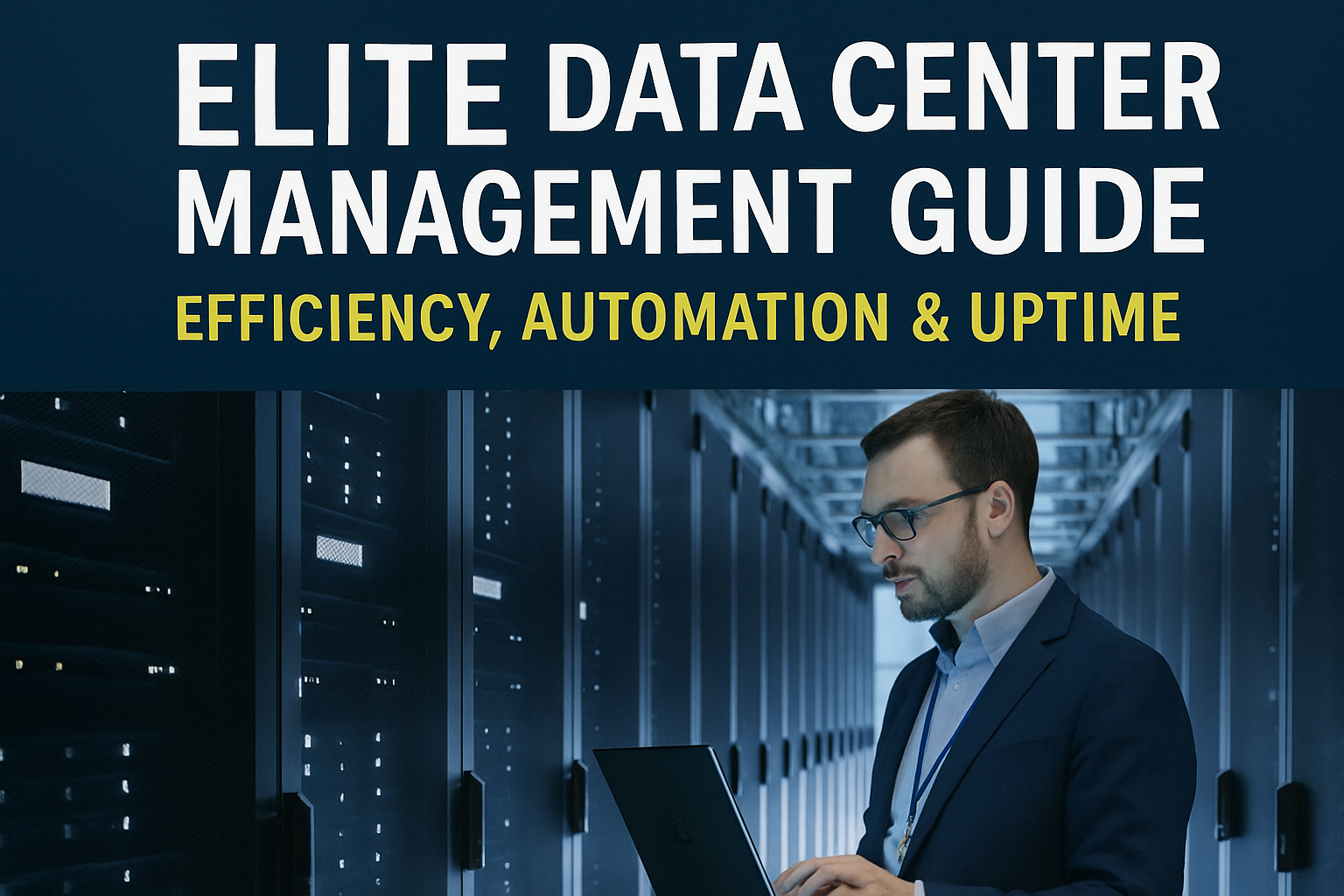
Master Guide to Data Center Operations: Uptime, Energy & Innovation
Mastering Mission-Critical Infrastructure: The Complete Guide to Data Center Excellence and Operational Resilience
In an era where digital operations power global commerce and critical services, data center reliability has evolved from a technical concern into a strategic business imperative. A single hour of unplanned downtime now costs organizations between $300,000 and $5 million, with 70% of outages exceeding $100,000 in losses. As businesses face mounting pressure to ensure 24/7 availability while managing soaring energy costs and increasingly complex infrastructure, the gap between reactive troubleshooting and proactive operational excellence has never been more consequential. encomputers
This comprehensive guide unveils the strategic frameworks, cutting-edge technologies, and proven methodologies that separate world-class data center operations from facilities plagued by costly disruptions. Drawing on the latest industry research, expert insights, and real-world implementations, we examine how forward-thinking organizations are transforming their approach to infrastructure management—achieving 40% higher operational efficiency, reducing unplanned downtime by 60%, and optimizing infrastructure costs by 35% through the disciplined execution of best practices. mcim24x7 canovate

The Hidden Costs of Infrastructure Failures: Understanding What’s at Stake
Financial Impact Beyond the Balance Sheet
The direct financial consequences of data center failures extend far beyond immediate revenue losses. When systems go dark, the cascading effects ripple through every aspect of business operations. Research from Information Technology Intelligence Consulting (ITIC) reveals that 91% of enterprises now report hourly downtime costs exceeding $300,000, while 44% of mid-sized and large organizations face potential losses of $1 million to $5 million per hour. Even micro-enterprises with fewer than 25 employees experience conservative estimates of $100,000 per hour in downtime costs. encomputers
These staggering figures represent only the tip of the iceberg. The true cost calculation must account for lost productivity—where a company with 50 employees faces approximately $1,797 per hour in workforce inefficiency during outages—alongside recovery expenses including emergency hardware procurement, overtime compensation, and consulting fees. Industry-specific impacts prove even more severe: automotive manufacturing facilities can hemorrhage $50,000 per minute ($3 million hourly) due to halted production lines, while manufacturing operations average $260,000 per hour across 800 annual downtime hours. mev
Reputational Damage and Long-Term Business Consequences
Beyond immediate financial losses, infrastructure failures inflict lasting damage to organizational reputation and stakeholder confidence. The 2025 State of Resilience report found that 100% of senior technology executives experienced outage-related revenue losses in the past year, with organizations averaging 86 outages annually—translating to more than five hours of monthly downtime. This frequency transforms what should be rare exceptions into predictable disruptions that erode customer trust, damage partner relationships, and undermine internal confidence in IT capabilities. cockroachlabs
The operational tempo of modern business compounds these challenges. With 55% of organizations experiencing disruptions at least weekly, and 70% of large enterprises requiring 60 minutes or more to resolve outages, the cumulative impact on business continuity becomes untenable. Customers increasingly expect instantaneous service availability, making even brief interruptions unacceptable in competitive markets. Organizations that fail to maintain operational resilience not only bleed revenue during outages but also lose market share to more reliable competitors. encomputers

Power Infrastructure: Building Unshakeable Electrical Foundations
Understanding Redundancy Models and Their Applications
Power redundancy represents the cornerstone of data center reliability, with architectural decisions in this domain directly determining uptime capabilities. The industry has standardized around several redundancy configurations, each offering distinct tradeoffs between cost, complexity, and resilience. The N+1 redundancy model—where “N” represents the minimum UPS units required for full load support plus one additional unit—provides a straightforward, cost-effective approach suitable for small to medium-sized operations. This configuration ensures at least one backup unit stands ready to assume full load if any primary unit fails, making it appropriate for enterprise IT environments and industrial applications where moderate redundancy suffices. socomec
Organizations requiring higher availability gravitate toward 2N redundancy, which duplicates the entire UPS system with each installation capable of independently supporting full operational load. This architecture delivers maximum reliability by providing complete fault tolerance—if one entire system experiences catastrophic failure, the secondary system continues uninterrupted operations. Large data centers, mission-critical applications, and financial institutions typically implement 2N configurations despite higher capital expenditures, recognizing that the cost of implementation pales in comparison to potential outage costs. americas.fujielectric
The most robust approach, 2(N+1) redundancy, combines principles from both models by providing two complete UPS systems, each with an additional redundancy unit. This configuration offers superior fault tolerance capable of maintaining operations even when multiple UPS units fail simultaneously, making it essential for very large data centers, highly critical industrial operations, and healthcare facilities where any power interruption could prove catastrophic. Modern implementations at facilities like Hub Europe demonstrate this approach through dual 20 kV power feeds, each creating independent power chains with dedicated equipment, ensuring seamless transitions during utility failures. contabo
Intelligent Power Distribution and Monitoring
Effective power infrastructure extends beyond redundant UPS systems to encompass sophisticated distribution and monitoring capabilities. Advanced facilities implement dual power paths where servers receive simultaneous power from two completely independent UPS systems, each capable of handling full load independently. This approach eliminates single points of failure in power protection—when one UPS requires maintenance or experiences technical issues, servers continue operating on the second path without any service interruption.
Real-time power monitoring through Data Center Infrastructure Management (DCIM) platforms provides operators with comprehensive visibility into power consumption patterns, enabling proactive identification of inefficiencies and potential issues. These systems continuously track Power Usage Effectiveness (PUE) metrics, with leading facilities achieving ratios as low as 1.036—meaning 96.4% of total facility power is directly supporting IT equipment rather than overhead systems. Organizations leveraging integrated monitoring report the ability to detect developing problems before they cause failures, reduce power consumption through targeted optimization, and ensure appropriate maintenance timing based on actual equipment conditions.
Strategic power management also incorporates automated transfer switch (ATS) technology that continuously monitors generator power quality during utility failures, switching servers from UPS to generator power once stability is achieved. Emergency generators typically require 10-15 seconds to reach full speed and stable output, during which UPS systems bridge the gap through battery-based systems providing up to 15 minutes of protection. This seamless orchestration ensures that IT equipment never experiences power interruption, even during complete utility failures affecting both primary and backup grid connections. datacenters
Thermal Management: Optimizing Cooling for Efficiency and Performance
Advanced Cooling Technologies and Strategies
Cooling systems consume 30-40% of total data center energy, representing both a significant cost center and a critical performance factor. Traditional air-cooling approaches are increasingly inadequate for modern high-density computing requirements, particularly with AI and machine learning workloads pushing rack densities from historical 8 kW levels toward 30-50 kW configurations. Leading organizations are adopting liquid cooling technologies that dramatically improve thermal management efficiency while reducing environmental impact—Microsoft’s 2025 research demonstrated that liquid cooling can reduce carbon emissions by 15-21% and energy usage by 15-20% compared to conventional air cooling. encoradvisors
Direct-to-chip liquid cooling, where coolant circulates directly across hot components through specialized channels, can reduce cooling-related energy consumption by 60-80% according to U.S. Department of Defense research. Immersion cooling—where entire servers are submerged in non-conductive dielectric fluid—offers even more dramatic efficiency gains for high-performance computing and AI clusters. Single-phase immersion systems pass heated fluid through heat exchangers alongside cooling water before recirculating, while two-phase systems leverage fluids with low boiling points that vaporize upon contact with hot equipment, condensing back to liquid state for reuse. wisegroupsolution
Organizations not ready for full liquid cooling deployment are implementing hybrid approaches that combine traditional methods with targeted liquid cooling for high-density zones. These strategies allow incremental adoption following thorough ROI and risk assessments, enabling data centers to optimize cooling effectiveness while managing capital expenditure. Rear-door heat exchange (RDHx) systems represent another middle-ground approach, running coolant through pipes or plates at equipment rack backs to cool exhaust air before heat enters the broader facility environment. Passive RDHx implementations rely on server fans to draw air into heat exchangers, while active systems deploy dedicated fans; each configuration offers distinct efficiency profiles. futuriom

Diagram illustrating liquid cooling processes in data centers, showing airflow and water-based cooling components like CRAH, CDU, chiller, and cooling tower lg
Artificial Intelligence and Automated Optimization
Artificial intelligence is revolutionizing cooling optimization by enabling real-time adjustments that human operators cannot achieve. Google’s collaboration with DeepMind AI demonstrated that machine learning algorithms can optimize cooling systems in real-time, reducing energy consumption by 30-40% through continuous analysis of temperature and humidity data. These systems automatically adjust fans and cooling units without human intervention, delivering unprecedented cooling optimization while minimizing operational overhead. wisegroupsolution
Predictive analytics extends AI capabilities further by forecasting cooling requirements based on workload patterns and environmental conditions, enabling proactive adjustments before thermal issues emerge. Modern DCIM platforms integrate these AI-driven capabilities with broader infrastructure management, providing operators with comprehensive dashboards that visualize thermal distribution, identify hot spots, and recommend optimization strategies. Organizations implementing AI-based energy management report 15-20% reductions in facility energy costs while maintaining or improving thermal management effectiveness.nlyte
Environmental monitoring systems connected to distributed IoT sensors enable administrators to track temperature, humidity, and airflow conditions across the entire data center floor in real-time. These systems generate automated alerts when conditions deviate from established thresholds, allowing immediate corrective action before equipment failures occur. Historical data analysis identifies trends that inform long-term optimization strategies. At the same time, integration with building automation systems ensures cooling infrastructure responds dynamically to actual thermal loads rather than operating at fixed capacities. mcim
Infrastructure Monitoring: Achieving Comprehensive Operational Visibility
Implementing Data Center Infrastructure Management Solutions
Data Center Infrastructure Management (DCIM) platforms serve as the nervous system of modern facilities, providing centralized visibility and control across all infrastructure domains. These comprehensive solutions monitor and manage IT equipment, power systems, cooling infrastructure, and environmental conditions through unified interfaces that eliminate operational silos. Leading DCIM implementations poll monitoring equipment multiple times hourly, collecting massive datasets that sophisticated analytics engines transform into actionable intelligence. nlyte
Real-time monitoring capabilities track critical metrics including power consumption at rack and device levels, thermal conditions throughout the facility, network performance indicators, and equipment health status. Organizations deploying DCIM report 40% improvements in operational efficiency through enhanced resource utilization, proactive issue identification, and data-driven decision making. The platforms generate automated alerts when monitored parameters exceed configured thresholds, with customizable escalation protocols ensuring appropriate personnel receive notifications for both alert conditions and subsequent resolution.
Advanced DCIM solutions incorporate three-dimensional visualization capabilities that provide intuitive representations of facility layouts, rack configurations, and power/network connectivity. These visual tools enable operators to quickly understand complex infrastructure relationships, plan equipment deployments, and troubleshoot connectivity issues without physical inspections. Integration with broader IT service management platforms creates seamless workflows where infrastructure monitoring connects directly with incident management, change control, and capacity planning processes. sunbirddcim datacenterre

RaMP DCIM software interface showing 3D data center rack view with detailed monitoring data for effective data center management datacenterresources
Asset Lifecycle and Capacity Management
Comprehensive asset management represents one of the most critical DCIM capabilities because accurate asset information enables all other optimization activities while providing foundation data for capacity planning, maintenance scheduling, and strategic decision-making. Effective implementations encompass asset discovery, documentation, lifecycle tracking, and performance analysis in integrated approaches that maintain current visibility as infrastructure evolves.mcim24x7
Modern DCIM platforms automatically discover IT equipment, power distribution components, and network devices, cataloging detailed configuration information including manufacturer specifications, installed locations, connectivity relationships, and operational status. This automated discovery eliminates reliance on error-prone spreadsheets and manual documentation while ensuring asset databases remain current despite frequent changes. Performance tracking monitors asset utilization and efficiency metrics, identifies optimization opportunities, and guides strategic planning decisions on equipment refresh cycles.
Capacity planning tools leverage comprehensive asset data to model infrastructure consumption patterns and forecast future requirements based on business growth projections. Predictive analytics examines historical trends to anticipate capacity constraints before they impact operations, while scenario modeling evaluates multiple growth strategies and their infrastructure implications. Organizations implementing strategic capacity planning achieve 40% better resource utilization, reduce infrastructure costs by 35%, and support 50% faster business growth through optimized allocation of space, power, and cooling resources. hyperviewhq
Security Architecture: Protecting Critical Infrastructure Through Defense-in-Depth
Multi-Layered Physical Security Controls
Physical security for data centers requires comprehensive defense-in-depth strategies that establish multiple protective barriers between potential threats and critical infrastructure. The most effective implementation structure is concentric layers, beginning at the facility perimeter and progressively increasing protection toward theinnermost zones containing the most sensitive systems. This medieval castle approach ensures that even if attackers breach outer defenses, additional security measures prevent access to core infrastructure. mitkatadvisory
Perimeter security establishes the first line of defense through high-resolution video surveillance systems, motion-activated lighting, and physical barriers equipped with intrusion detection. Video content analytics (VCA) automatically detects individuals and objects, identifies illegal activities, tracks movement patterns, and minimizes false alarms. Modern facilities deploy smart sensors along fences and rooftops that detect climbing attempts, cutting, or ground vibrations, integrating these alerts with surveillance systems for coordinated response. Electric fencing solutions deliver memorable but legally safe deterrents when breach attempts occur, providing more effective protection than traditional barriers. amarok
Building entry points implement multi-factor authentication combining biometric identification—palm-vein, iris, or facial recognition scanning—with traditional access cards and PIN codes. This layered authentication dramatically reduces risks from stolen credentials or social engineering attempts while creating detailed audit trails of all facility access. Mantraps, two-door entry chambers that restrict passage to one authenticated person at a time, prevent tailgating through biometric verification and weight sensors that detect unauthorized individuals attempting to follow approved personnel.matterport+2
Access Control and Visitor Management
Robust access control systems form the backbone of data center physical security by ensuring only authorized personnel access sensitive areas. Modern implementations employ role-based access control (RBAC) principles that grant minimum necessary privileges—staff receive access only to zones required for their specific responsibilities. Biometric systems verify identity using multiple physiological characteristics, and some facilities implement behavior-based authentication that identifies users based on characteristic entry patterns. databank
Comprehensive visitor management begins with pre-registration and digital credential verification before individuals arrive on-site. Upon arrival, visitors undergo secondary biometric verification, receive time-limited RFID badges that expire automatically after designated periods, and must remain escorted by authorized personnel throughout their visit. Visitor badges clearly display names, visitor status, and authorizing employees, with strict protocols governing badge inventory control to prevent unauthorized duplication. All personal electronic devices must be surrendered before entering areas beyond reception, and defined exclusion zones prevent visitors from accessing the most critical infrastructure, regardless of escort. mitkatadvisory
Monitoring and logging capabilities track every access attempt across all entry points, creating comprehensive audit trails that support compliance verification and incident investigation. Security Operations Centers (SOCs) integrate physical access logs, CCTV feeds, intrusion alerts, and environmental monitoring into unified dashboards that enable coordinated responses to security events. Regular security drills simulate various threat scenarios including intrusion attempts, tailgating, and social engineering attacks, exposing vulnerabilities in security protocols before adversaries exploit them. Background checks and ongoing monitoring of access pattern anomalies help identify potential insider threats before they manifest in security breaches. ,gca.isa matrixcomsec

Illustration of biometric access control at a secure data center with server racks matrixcomsec
Capacity Planning: Strategic Infrastructure Scaling for Business Growth
Forecasting and Demand Modeling
Strategic capacity planning transforms reactive infrastructure management into proactive growth enablement by systematically analyzing, forecasting, and optimizing facility resources to support current operations while enabling future expansion. Organizations implementing comprehensive capacity planning strategies achieve 40% better resource utilization, reduce infrastructure costs by up to 35%, and support 50% faster business growth through optimized space, power, and cooling allocation. This forward-looking approach anticipates requirements and implements solutions that support business objectives without operational disruption. mcim24x7
The foundation of effective capacity planning relies on accurate resource monitoring, demand forecasting, and comprehensive modeling that accounts for interdependencies among infrastructure components. Space allocation directly affects power requirements, cooling capacity impacts equipment density potential, and network connectivity influences deployment flexibility—strategic planning must address these relationships holistically. Modern forecasting leverages predictive analytics that examine historical consumption patterns, business growth projections, and technology evolution trends to anticipate future requirements. nlyte
Scenario modeling capabilities evaluate multiple growth strategies and their infrastructure implications, enabling data-driven decision-making about expansion timing, technology choices, and implementation approaches. These tools assess financial impacts of different scenarios, helping organizations identify the most cost-effective capacity expansion strategies while ensuring adequate resources for projected business needs. Strategic planning considers current requirements alongside future scalability, implementing modular designs that facilitate easier upgrades and ensure infrastructure can grow in alignment with business evolution. mcim24x7
Space Optimization and Power Distribution
Space planning addresses the physical accommodation of IT equipment while ensuring adequate power delivery and cooling capacity to support operational requirements. Effective implementations consider equipment dimensions, power requirements, thermal output, and cable management needs in integrated analysis that ensures deployment feasibility. Strategic space planning can increase facility capacity by 20-30% by better utilizing an existing resource while maintaining all operational requirements. mcim24x7
Three-dimensional modeling platforms visualize different deployment scenarios and analyze their impact on capacity utilization and operational efficiency before physical implementation. These tools enable facility managers to evaluate multiple layout options, identify potential issues that could affect deployment success, and optimize configurations for maximum density without compromising cooling effectiveness. Hot and cold aisle containment strategies separate airflow to prevent mixing, improving cooling efficiency while enabling higher-density deployments. nlyte
Power capacity planning addresses electrical distribution throughout facilities to support current operations while enabling future growth. This comprehensive approach considers utility capacity, UPS systems, power distribution units, and circuit-level allocation, integrating these to optimize power utilization and reliability. Strategic planning incorporates demand forecasting based on business projections and technology trends, enabling proactive expansion that prevents power constraints from limiting business growth. Organizations implementing sophisticated power planning report the ability to support substantially higher equipment densities while maintaining or reducing overall power infrastructure costs. dataspan
Maintenance Excellence: Transitioning from Reactive to Predictive Operations
Preventive and Predictive Maintenance Strategies
Maintenance excellence distinguishes world-class data centers from facilities plagued by unexpected failures and costly emergency repairs. Organizations implementing comprehensive preventive maintenance programs reduce unplanned downtime by up to 60%, extend equipment lifespans, and optimize operational costs. The transition from reactive troubleshooting to strategic maintenance planning begins with establishing standardized procedures for all critical systems—power, cooling, equipment, and security infrastructure. mcim24x7
Predictive maintenance leverages intelligent monitoring technologies and machine learning algorithms to forecast potential equipment malfunctions by analyzing performance trends and operational data. Rather than following manufacturer-recommended maintenance schedules that may not reflect actual equipment conditions, predictive approaches trigger maintenance activities based on real-time performance analysis and condition indicators. Data center operators implementing offline reinforcement learning frameworks for cooling system optimization report achieving 14-21% energy savings while maintaining strict safety and operational constraints. encoradvisors
Environmental monitoring with distributed IoT sensors provides operational data that predictive algorithms require, including temperature, humidity, vibration, power consumption, and efficiency metrics. Advanced analytics identify subtle patterns indicating developing issues before they cause failures—for example, detecting HVAC performance degradation requiring maintenance long before manufacturer schedules would indicate intervention. This data-driven approach enables maintenance teams to remediate issues early, avoiding premature equipment replacement and preventing costly downtime that damages facility reputation.
Condition-Based Monitoring and Maintenance Optimization
Condition-based maintenance represents the pinnacle of predictive capabilities by triggering interventions based on actual equipment status rather than calendar schedules or predictive models. Real-time monitoring data continuously assesses equipment health, with maintenance activities occurring only when condition indicators demonstrate actual need. This approach optimizes maintenance timing to maximize equipment utilization while ensuring reliability, eliminating wasteful scheduled maintenance on equipment operating within acceptable parameters. mcim24x7
Comprehensive maintenance programs integrate with broader facility management activities including asset management, capacity planning, and performance optimization to ensure maintenance activities support overall operational excellence and strategic objectives. Maintenance analytics analyze historical data to identify optimization opportunities, predict equipment lifecycle requirements, and guide strategic decisions about maintenance strategies and equipment replacement timing. Organizations implementing integrated approaches report dramatically reduced emergency maintenance requirements, extended equipment lifespans, and optimized total cost of ownership. matterport
Resource optimization coordinates maintenance activities to minimize operational impact while ensuring appropriate expertise and materials are available when needed. Sophisticated scheduling algorithms balance maintenance requirements across multiple systems, preventing conflicts that could compromise redundancy when simultaneous maintenance is required on interdependent systems. Documentation systems maintain comprehensive maintenance histories that support optimization analysis and strategic planning for equipment lifecycle management. This historical data enables increasingly accurate predictive models as facilities accumulate operational experience, creating a virtuous cycle of continuous improvement in maintenance effectiveness. jll
“In the high-intensity environment of a data center, facility management teams often make decisions based on today’s urgency rather than on the bigger, long-term picture. Adopting the total cost of ownership approach to facilities management reduces costs and risks while enabling strategic capacity planning that supports business growth.” — JLL Data Center Best Practices Study
Energy Efficiency: Achieving Sustainability While Reducing Operational Costs
Power Usage Effectiveness and Efficiency Metrics
Power Usage Effectiveness (PUE) has emerged as the definitive metric for assessing data center energy efficiency since its introduction by the Green Grid in 2006. This standardized measurement divides total facility power consumption by IT equipment energy consumption, with values closer to 1.0 indicating superior efficiency. A PUE of 1.0 represents a theoretically perfect facility where 100% of power directly supports IT operations with zero overhead for cooling, lighting, and power distribution systems.nlyte+3
Industry averages have improved substantially since PUE’s introduction—early surveys found typical values between 2.5 and 3.0, meaning facilities consumed 2.5 to 3 watts of total power for every watt delivered to IT equipment. Through focused optimization efforts, the current industry average has declined to approximately 1.59-1.8, though substantial variation exists based on facility age, design, and operational practices. World-class facilities demonstrate that dramatically superior performance remains achievable: the National Renewable Energy Laboratory’s Golden, Colorado data center achieved an annualized PUE of 1.036 through blade servers with variable speed fans, 70% environment virtualization, and low-energy cooling techniques.nrel+4
Calculating PUE requires measuring total facility power at utility meters—for mixed-use buildings, this requires isolating data center consumption from other operations. IT equipment energy encompasses power consumed by servers, storage systems, network equipment, and monitoring infrastructure. Leading organizations implement continuous PUE monitoring through DCIM platforms that automatically collect data from building feeds and IT loads, calculating real-time ratios and consolidating information into actionable dashboards. This automated approach eliminates manual calculation errors while enabling trend analysis that identifies optimization opportunities. nlyte
Practical Strategies for Energy Optimization
Achieving world-class energy efficiency requires the systematic implementation of proven optimization strategies across power, cooling, and IT infrastructure. Server consolidation through virtualization reduces physical hardware requirements while improving utilization rates—underutilized servers operating at partial capacity consume disproportionate power relative to computational output. Organizations can identify “zombie servers” that draw power without performing useful functions through comprehensive monitoring, decommissioning these systems and replacing them with efficient hardware. nlyte
Cooling optimization represents the single most significant opportunity for efficiency gains given that thermal management typically consumes 30-40% of total facility power. Free cooling techniques leverage natural resources including outside air or water to eliminate energy-intensive compressor operation, dramatically reducing costs in suitable climates. Hot and cold aisle containment prevents airflow mixing, improving cooling effectiveness while reducing required cooling capacity. Strategic temperature management—raising cold-aisle temperatures within equipment tolerance ranges—can significantly reduce cooling energy consumption without affecting hardware reliability. encoradvisors
Hardware efficiency improvements deliver compounding benefits as organizations refresh aging equipment. Modern IT hardware incorporates substantially better power efficiency than legacy systems—average IT equipment efficiency doubles approximately every two years. Solid-state drives consume less power than traditional hard disks while delivering superior performance, and energy-efficient power distribution units minimize conversion losses. Organizations implementing comprehensive efficiency programs combining these strategies typically achieve PUE improvements from industry-average 1.8 levels down to 1.2 or better, representing 33% reduction in total facility power requirements. nlyte
Automation and Artificial Intelligence: The Future of Data Center Operations
Machine Learning for Operational Optimization
Artificial intelligence and machine learning are fundamentally transforming data center operations by enabling capabilities impossible through human management alone. Automated Machine Learning (AutoML) platforms are rapidly improving, automating tasks including data preprocessing, feature selection, and hyperparameter tuning. These systems will become increasingly user-friendly over the next decade, allowing personnel without specialized data science expertise to create high-performing AI models that optimize facility operations. esds
Organizations are leveraging AI-driven automation for predictive maintenance, automated task assignment, data analytics, and enhanced decision support through intelligent analysis of massive operational datasets. Machine learning algorithms identify patterns in historical data that humans cannot detect, optimizing facility operations by deriving insights from comprehensive analyses of power consumption, thermal distribution, equipment performance, and environmental conditions. Deployment of AI-based energy management systems produces 15-20% reductions in energy costs while improving operational resilience through proactive identification of potential system failures and automated workload shifting. databank
Edge computing integration brings AI capabilities directly to infrastructure monitoring points, minimizing latency for real-time decision-making while reducing bandwidth requirements for centralized processing. This distributed approach enables rapid response to developing issues—AI systems can detect anomalies and implement corrective actions in microseconds, preventing cascading failures that would occur during the delay inherent in routing data to centralized processors. Reinforcement Learning with Human Feedback (RLHF) adds oversight to automated systems, fine-tuning AI models to align with organizational preferences and ethical considerations while maintaining operational effectiveness.
Infrastructure as Code and Automated Scaling
Infrastructure as Code (IaC) represents a paradigm shift in data center management by treating infrastructure configuration as programmable code rather than manual processes. This approach enables small teams to manage growing IT environments while increasing process consistency and reducing configuration errors. Automated scaling dynamically adjusts resource allocation based on actual demand, eliminating the need for manual capacity adjustments. device42
Autoscaling systems monitor baseline capacity utilization and automatically provision additional resources when demand exceeds configured thresholds, with maximum limits preventing runaway costs. This automated approach improves application performance and service quality through three distinct models: reactive scaling responds to actual demand spikes, predictive analytics leverage AI and machine learning to forecast capacity needs and proactively provision resources before demand materializes, and scheduled scaling pre-allocates capacity for known events. Cloud integration enables hybrid approaches in which on-premises facilities burst to cloud resources during peak demand, maintaining performance without overprovisioning local infrastructure. profileits
Orchestration platforms coordinate complex workflows across infrastructure domains, ensuring provisioning activities consider interdependencies between power, cooling, networking, and compute resources. These systems validate configurations before implementation, preventing errors that could compromise operations. Documentation automation maintains current records of infrastructure state, eliminating discrepancies between actual configurations and recorded information that plague manually managed environments. Organizations implementing comprehensive automation report substantial improvements in operational efficiency, consistency, and scalability while reducing staffing requirements for routine operational tasks. databank
The DinaBina Advantage: Technical Project Management Excellence for Critical Infrastructure
Comprehensive Electromechanical Solutions
DinaBina Technical Project Management delivers specialized expertise in the complex electromechanical systems that form the backbone of modern data center operations. With extensive experience in Fire Fighting Systems, FAS, HVAC, and electrical infrastructure, their team of skilled professionals has the knowledge and technical capabilities to address data center infrastructure challenges efficiently and effectively. Their comprehensive service portfolio spans plumbing solutions, electrical services, HVAC expertise, and fire safety systems—the critical building blocks that enable reliable facility operations.
The company’s approach combines cutting-edge methodologies with deep industry expertise to ensure projects are executed flawlessly from initial planning through final implementation. By tailoring services to meet each client’s unique challenges, DinaBina optimizes efficiency, minimizes risks, and maximizes value throughout project lifecycles. Their technical service offerings encompass system setup and configuration, ongoing maintenance and support, expert consultation, and strategic technology upgrades that keep facilities current with evolving requirements. dinabina
Strategic facilities management services focus on future-proofing operations through thoughtful, proactive planning. Whether optimizing current workflows, integrating energy-efficient systems, or preparing for facility expansion, DinaBina’s project management expertise guides organizations toward operational excellence. Their preventive maintenance strategies reduce unexpected downtime and associated costs, delivering significant long-term savings while ensuring continuous availability of critical infrastructure. Risk management and compliance capabilities prioritize safety and regulatory adherence, implementing robust strategies that minimize liability and ensure smooth operations.
Sustainable Innovation and Operational Excellence
DinaBina’s commitment to sustainability consulting for facility and property management positions them at the intersection of technical excellence and environmental stewardship. Their holistic, data-driven approach to sustainability in built environments begins with comprehensive assessment of current operations, identification of improvement opportunities, and development of customized roadmaps to achieve sustainability goals. Leveraging cutting-edge technologies and industry best practices, they optimize resource efficiency, reduce environmental impact, and enhance occupant well-being while maintaining operational performance.
Key focus areas include energy efficiency and renewable energy integration, smart building solutions leveraging IoT and AI technologies, water conservation and management systems, waste reduction and recycling program implementation, and creation of healthy indoor environments that support occupant productivity. Real-world implementations demonstrate measurable impacts: their Smart Factory Initiative showcases revolutionary transformations in manufacturing processes through advanced electromechanical systems that simultaneously improve productivity and sustainability. omg057e.myportfolio
The company’s budgeting and cost control expertise ensures financial optimization alongside technical excellence. Their data-driven forecasting, predictive maintenance strategies, and innovative KPI frameworks help organizations maximize efficiency while minimizing operational costs. Asset lifecycle analysis predicts future maintenance and replacement requirements, enabling proactive financial planning that prevents budget surprises while optimizing equipment utilization. Integration of smart building management systems with IoT devices provides real-time data on energy consumption and system performance, allowing continuous optimization that reduces costs while improving operational effectiveness.
By choosing DinaBina Technical Project Management for critical infrastructure needs, organizations partner with a company combining extensive industry experience with technical mastery to deliver reliable, efficient, high-quality solutions that support both immediate operational requirements and long-term strategic objectives. Their dedication to quality, transparency, and continuous improvement ensures clients receive not merely service provision but genuine partnership committed to sustained success. dinabina
Building Organizational Resilience: Comprehensive Risk Management
Disaster Recovery and Business Continuity
Comprehensive disaster recovery planning extends beyond technology redundancy to encompass coordinated organizational responses that ensure business continuity during crisis events. Facilities must prepare for diverse threats including natural disasters, extended power outages, cyber-attacks, and equipment failures through documented procedures that clearly define roles, responsibilities, and response protocols. Physical safeguards including seismic bracing for earthquake protection, flood barriers for vulnerable locations, and fire-resistant materials protect infrastructure against environmental threats. hyperviewhq
Emergency response training ensures all staff understand disaster recovery procedures and their individual responsibilities during crisis situations. Regular evacuation drills, training on safe system shutdown procedures, and tabletop exercises simulating various scenarios build organizational muscle memory that enables effective response when actual emergencies occur. Business continuity planning tools integrate with DCIM systems to monitor facility health, capacity, and energy usage in real-time, with automated alerts for site-level or network disruptions. Organizations should regularly conduct resilience drills based on scenario analysis from DCIM reports, validating that documented procedures remain effective as infrastructure evolves.mitkatadvisory
Geographic redundancy through multi-site operations provides ultimate resilience against localized disasters that could render single facilities inoperable. Distributed architectures enable workload migration between sites during emergencies, maintaining service availability even when individual locations experience catastrophic failures. Organizations implementing comprehensive business continuity strategies report dramatically improved resilience, with disaster events that would previously have caused extended outages instead resulting in transparent failover to backup systems with minimal service impact. cockroachlabs
Compliance and Regulatory Adherence
Data center operations face increasingly stringent compliance requirements from industry regulations, regional legislation, and customer contractual obligations. Security best practices must address both physical and cyber domains while meeting specific requirements including ISO standards, SOC 2 certifications, HIPAA regulations for healthcare data, PCI DSS for payment processing, and GDPR for personal data protection. Automated compliance tracking through DCIM platforms maintains detailed logs for access, power consumption, environmental readings, and equipment changes—creating audit trails that satisfy regulatory and customer requirements.
Real-time auditability capabilities generate exportable reports demonstrating compliance with specific requirements, streamlining audit processes that would otherwise require weeks of manual data compilation. Geographic data sovereignty considerations ensure workloads remain within approved jurisdictions, addressing regulatory requirements that mandate certain data types remain in specific countries or regions. Organizations operating in multiple jurisdictions must navigate complex webs of overlapping and sometimes conflicting requirements, making comprehensive compliance management essential for avoiding penalties and maintaining certifications. gminsights
Environmental regulations increasingly impact data center operations as governments implement sustainability mandates. The European Union has established strict 2030 standards requiring greener data center operations, with cities such as Singapore and Amsterdam implementing construction moratoriums unless facilities obtain green certifications. California is considering legislation that would limit power consumption per facility, requiring operators to achieve higher efficiency or face operational constraints. Organizations proactively implementing sustainability practices and efficiency improvements position themselves advantageously for regulatory environments that will only become more demanding in coming years. wisegroupsolution
Future-Proofing Infrastructure: Emerging Technologies and Trends
The AI and High-Performance Computing Revolution
Artificial intelligence workloads are fundamentally reshaping data center infrastructure requirements, with generative AI, large language models, and autonomous systems driving unprecedented demand for high-density computing. AI chips including NVIDIA H100 and custom ASICs require dramatically increased power and cooling solutions compared to traditional server workloads. Hyperscale operators are re-architecting facilities to deliver 10-50 kW per rack—five to six times historical density levels—with Google, AWS, and Meta committing hundreds of billions in capital to AI-specific data center clusters. gminsights
McKinsey & Company projects that data center capacity ready for AI will grow at 33% annually through 2030, with approximately 70% of overall demand requiring facilities capable of running advanced AI workloads by decade’s end. Generative AI specifically represents the fastest-growing use case, with Goldman Sachs forecasting artificial intelligence will drive 165% increases in data center power demand through 2030. Organizations not preparing infrastructure for these requirements risk obsolescence as computing workloads inexorably shift toward AI-intensive applications. gminsights
Edge computing expansion brings processing capabilities closer to data sources, minimizing latency for real-time applications such as autonomous vehicles, smart manufacturing, and telemedicine. More than 50% of data is now being processed outside traditional centralized data centers, with cities and secondary markets experiencing rapid deployment of micro data centers and containerized facilities. Telecommunications providers are incorporating edge clouds to enhance 5G deployments, creating distributed computing architectures that complement rather than replace centralized facilities. This evolution toward hybrid architectures combining hyperscale central facilities with distributed edge deployments requires new management approaches and operational models. hyperviewhq
Sustainability and Renewable Energy Integration
Sustainability has evolved from an optional initiative to a business imperative driven by regulatory requirements, stakeholder expectations, and economic incentives. Organizations implementing renewable energy sources including solar, wind, and hydroelectric power reduce both operational costs and carbon footprints while insulating themselves from fossil fuel price volatility. On-site generation through rooftop solar arrays or adjacent wind turbines provides the most direct path to renewable energy, though power purchase agreements with utility-scale renewable projects offer alternatives for facilities where on-site generation proves impractical. nlyte
Carbon-neutrality commitments from major cloud providers are accelerating renewable energy adoption across the industry. Data centers are increasingly adopting grid-friendly operations, adjusting workload distributions and power consumption patterns to align with renewable energy availability. The U.S. Department of Energy announced $3.5 billion in grant funding to support demand response integration and data center infrastructure improvements, recognizing their strategic importance to grid modernization efforts. Organizations implementing sophisticated energy management can shift workloads to times and locations with abundant renewable generation, dramatically reducing carbon footprints while potentially lowering energy costs through favorable timing. gminsights
Heat reuse and recovery technologies transform data centers from pure energy consumers into potential energy providers for adjacent operations. Waste heat from data center operations can warm nearby buildings, support industrial processes requiring thermal energy, or drive absorption cooling systems. Some jurisdictions are beginning to mandate heat recovery for new data center construction, recognizing that waste heat represents valuable energy that should be captured rather than dissipated to the environment. Organizations proactively implementing heat recovery position themselves favorably for future regulations while potentially generating additional revenue streams from thermal energy sales. wisegroupsolution
Conclusion: The Path to Operational Excellence
Data center operational excellence goes far beyond technical proficiency with infrastructure systems—it demands theholistic integration of proven methodologies, cutting-edge technologies, and organizational disciplines that transform reactive troubleshooting into proactive optimization. Organizations that successfully navigate this transformation achieve measurable results: 40% improvements in operational efficiency, 60% reductions in unplanned downtime, 35% optimization of infrastructure costs, and positioning for sustainable growth in increasingly demanding competitive environments. mcim24x7
The journey toward excellence begins with honest assessment of current capabilities against best practices documented throughout this guide. Organizations should systematically evaluate their power redundancy configurations, cooling efficiency metrics, monitoring and management platforms, security architectures, capacity planning processes, maintenance strategies, energy efficiency performance, and automation maturity. This gap analysis identifies specific improvement opportunities while establishing baseline measurements against which progress can be tracked. encoradvisors
Implementation should follow a phased approach that prioritizes the highest-impact opportunities while building organizational capabilities incrementally. Quick wins in areas such as monitoring deployment or establishing preventive maintenance demonstrate value and build momentum for more substantial transformations. Throughout implementation, organizations must maintain focus on continuous improvement—operational excellence is not a destination but an ongoing journey of refinement, adaptation, and optimization as technologies evolve and business requirements change. matterport
The data center infrastructure of tomorrow will bear little resemblance to today’s facilities. By 2030, industry analysts project that AI and machine learning workloads will comprise over 60% of processing requirements, carbon-neutral or carbon-negative operations will become standard expectations rather than differentiators, and entirely new facility types supporting quantum computing and neural compute clusters may emerge. Organizations that begin today building foundations of operational excellence, technological sophistication, and strategic adaptability will thrive in this transformed landscape. Those who delay will find themselves perpetually behind, struggling to catch up while competitors leverage superior infrastructure as acompetitive advantage. gminsights
The stakes could not be clearer: in a digitally-dependent world where every hour of downtime costs hundreds of thousands or millions of dollars, where customers expect instantaneous service availability, and where sustainability has become both regulatory requirement and stakeholder expectation, data center operational excellence has evolved from technical concern to strategic imperative. Organizations that embrace this reality and commit to the disciplines of excellence will secure competitive advantages that directly translate into business success. The time to begin that journey is now
Comments
“Together, We Keep It Alive”
Words find meaning when hearts stay connected.
If this reflection reached you, your small act of support keeps the light of shared purpose alive.
Please write to us at dinabinamarigold@gmail.com for an invoice, if required.








Leave a Reply