The Intelligence Layer: How Orchestrated Buildings Are Quietly Outperforming Entire Business Strategies
Meta Description: Discover how modern facility management has evolved from background operations into a strategic engine that drives profitability, sustainability, and human performance across the built environment.
Focus Keyword: Strategic Facility Management | Reading Time: ~22 minutes | Category: Facility Management, Smart Buildings, Operational Excellence
Introduction: The Question No One Is Asking—But Should Be

What if the single biggest untapped competitive advantage in your organization isn’t your marketing team, your product roadmap, or your talent pipeline — but your building?
Not the structure. Not the square footage. The intelligence inside it.
Right now, most organizations treat their facilities as a cost to minimize. They budget for repairs, argue over cleaning contracts, and scramble when an HVAC unit fails at 2 a.m. They manage buildings the same way a driver manages a flat tire: reactively, reluctantly, and always too late.
But a new class of organizations is doing something radically different. They are treating the built environment as a strategic system — one that influences employee performance, energy economics, brand perception, risk exposure, and long-term resilience. And the results are staggering.
This post is for facility professionals, operations leaders, C-suite executives, and curious minds who sense that there’s more to a building than meets the eye. By the end, you won’t just understand facility management differently — you’ll see it as one of the most powerful levers a modern organization has ever had access to adenservices
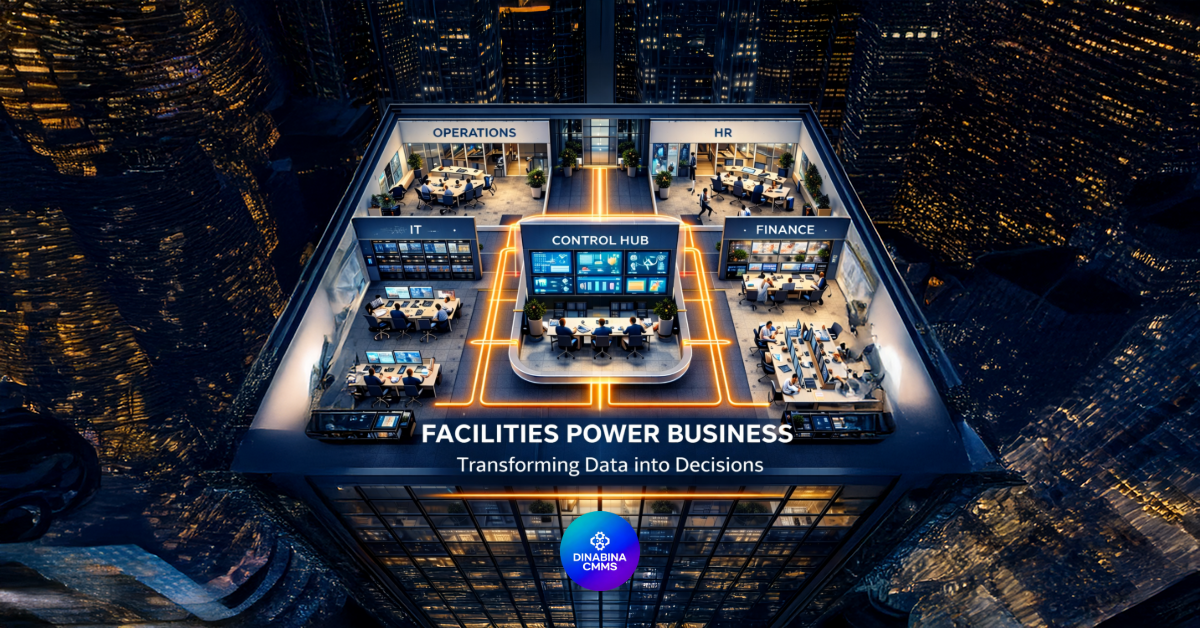
The modern facility management operations center: where data streams from across a building converge into strategic decisions.
Part I: The Misunderstood Function That Runs Everything
Why Facility Management Has Been Getting It Wrong
For decades, facility management lived in the basement — literally and figuratively. It was the department that “kept the lights on.” The people who fixed broken toilets, negotiated janitorial contracts, and responded to tenant complaints about conference room temperatures.
That era is over. And the organizations that haven’t noticed yet are bleeding money through invisible cracks.
The global facility management market was valued at approximately $1.3 trillion in 2023 and is projected to exceed $2 trillion by 2030. This growth isn’t driven by more buildings being built. It’s driven by a fundamental shift in how organizations understand the relationship between physical environment and organizational performance.
A facility, at its most fundamental level, is the operating system on which your entire organization runs. Every meeting, every delivery, every customer interaction, every product manufactured, every piece of data processed — it all happens inside a built environment. When that environment malfunctions, underperforms, or operates out of alignment with organizational goals, the ripple effects are invisible but devastating.
The Four Silent Costs Organizations Ignore
Most executives can tell you their payroll costs to the dollar. Very few can tell you what poor facility management costs them. Here’s what the data says:
- Energy waste: Buildings that lack smart energy systems can waste 30–40% of their energy consumption through inefficient lighting, HVAC misconfiguration, and after-hours consumption.
- Unplanned downtime: Equipment failure caused by reactive maintenance strategies costs organizations significantly more than preventive programs — industry estimates range from 3x to 5x higher per incident.
- Space inefficiency: Post-pandemic data reveals that many organizations use only 40–60% of their office space at any given time, yet pay for 100% of it.
- Talent friction: Research consistently links poor workspace quality — bad air, noise pollution, uncomfortable temperatures, cluttered environments — to reduced concentration, higher absenteeism, and accelerated employee turnover.
The organizations that have solved these four problems are not the ones with bigger budgets. They’re the ones with smarter systems.
Part II: The New Anatomy of Strategic Facility Management
From Cost Center to Value Engine

The shift from reactive to strategic facility management doesn’t happen overnight. It requires a fundamental reframing of what facilities do for an organization.
The most progressive organizations now integrate facility management with HR, IT, Finance, and Corporate Strategy. This isn’t a reorganization chart exercise. It’s a philosophical revolution in how space, service, and systems are understood as business functions rather than overhead.
Think of it this way: when a sales team misses revenue targets, the CEO asks tough questions. When a building operates at 35% energy inefficiency or when employee productivity drops because of poor workspace design, no one asks any questions at all. That asymmetry is the problem.
Strategic facility leaders have begun to close this gap by doing three things differently:
- Translating business goals into physical environments. A company focused on innovation needs different spaces than one focused on process execution. Strategic FMs design, deploy, and continuously adapt spaces to serve cognitive and cultural objectives — not just operational ones.
- Converting building data into organizational intelligence. Smart buildings generate enormous volumes of data — occupancy patterns, energy consumption by zone, air quality readings, equipment health metrics. Strategic FMs use this data to make decisions about investment, risk, and resource allocation.
- Unifying fragmented systems under one coherent roadmap. Most organizations have HVAC systems that don’t talk to lighting controls, security systems disconnected from access analytics, and maintenance teams operating on spreadsheets. Strategic FM eliminates these information silos.
Real-time facility dashboards give strategic FMs the intelligence to make data-backed decisions before problems escalate.
The Four Pillars of the Intelligent Built Environment
Modern facility management is built on four interconnected pillars. Remove any one of them, and the structure weakens.
1. People
The built environment exists to serve human performance. Every design decision, every maintenance priority, every technology investment must be filtered through a single question: How does this affect the people inside the building?
This means air quality monitoring, ergonomic workspace design, acoustic zoning for focus and collaboration, and responsive service systems that make occupants feel valued — not tolerated.
2. Place
Space is not neutral. The arrangement of a room influences whether people collaborate or isolate. The temperature of an office influences cognitive function. The quality of natural light influences mood and circadian health. Strategic FMs treat place as an active variable in organizational performance.
3. Process
Efficient facility management requires standardized, documented, and continuously improved workflows. Whether it’s a maintenance work order, a visitor management protocol, or an emergency response plan, process is what separates high-performing FM operations from chaotic ones.
4. Technology
AI, IoT, CMMS (Computerized Maintenance Management Systems), digital twins, and Building Management Systems (BMS) are not luxury upgrades — they are now the baseline infrastructure for facilities that compete.
Part III: The Technology Revolution Reshaping Buildings
AI and Predictive Maintenance: The End of the 2 a.m. Emergency

The old model of facility maintenance was simple and brutal: wait for something to break, then fix it. This “run-to-failure” approach is one of the most expensive operational decisions an organization can make.
Predictive maintenance, powered by AI and IoT sensors, flips this equation entirely. Sensors embedded in HVAC systems, elevators, generators, pumps, and electrical infrastructure continuously monitor performance parameters. Machine learning algorithms analyze these data streams, identifying anomalies that precede failures — often weeks before a human technician would notice anything wrong.
The results are transformative:
- Equipment lifespan extended by 15–20% through proactive care
- Maintenance costs reduced by up to 25% compared to reactive strategies
- Unplanned downtime nearly eliminated in facilities with mature predictive programs
But the true value of AI in facilities goes beyond maintenance. Modern AI systems analyze occupancy patterns to automatically adjust lighting and HVAC zone by zone, minute by minute. They identify which conference rooms go unused despite being booked. They flag anomalous energy consumption that might indicate equipment malfunction or unauthorized usage. They do this continuously, invisibly, and at a scale no human team could match.
Smart building energy management systems integrate solar, IoT, and AI to create buildings that think and adapt in real time.
Digital Twins: The Building That Exists Twice
One of the most powerful — and least understood — technologies in modern facility management is the digital twin: a virtual replica of a physical building that mirrors its real-world state in real time.
A digital twin doesn’t just show you what a building looks like. It shows you what the building is doing at every moment — how energy flows through it, where occupancy is concentrated, which systems are under stress, and what will happen to operational costs if you make a specific change.
Organizations using digital twins report:
- Faster decision-making on renovation, reconfiguration, and investment
- Scenario modeling that allows FMs to test changes virtually before implementing them physically
- Regulatory compliance tracking that keeps ESG commitments visible and auditable
Digital twins are still nascent in most markets, but they represent the future of strategic facility management: a living, breathing intelligence layer that sits between the physical building and the decisions made about it.
IoT and the Sensored Environment
The Internet of Things has turned buildings into biological organisms — constantly sensing, responding, and adapting. Today’s smart buildings deploy sensors that monitor:
- Occupancy and foot traffic by zone and time of day
- Air quality including CO₂ levels, particulate matter, humidity, and volatile organic compounds
- Energy consumption by circuit, floor, and system
- Equipment health through vibration, temperature, and runtime analysis
- Security and access through integrated credential management
These aren’t gadgets. They are the sensory nervous system of the organization’s most critical physical asset. Organizations investing in smart building systems have reported energy efficiency gains of up to 30% — a number that translates directly to operating margins, sustainability targets, and carbon reduction commitments.
Part IV: Sustainability — The Non-Negotiable Mandate
ESG Is No Longer a Checkbox. It’s a Competitive Weapon.

Growth Doesn’t Break Systems—Poor Infrastructure Does (And You Can Fix It Now)
In the previuos year 2025 and beyond, sustainability has ceased to be a corporate social responsibility footnote and become a hard business imperative. The drivers are converging from every direction:
- Regulatory pressure: Governments across Europe, Asia, and increasingly India are mandating carbon disclosure, energy benchmarking, and green building certifications for commercial facilities
- Investor scrutiny: ESG frameworks now influence capital allocation decisions at institutional scale. Buildings with poor environmental profiles carry financial risk
- Talent expectations: A growing body of research confirms that employees — especially younger generations — factor workplace sustainability into their employment decisions
- Customer perception: Organizations operating in energy-intensive, poorly managed facilities face growing reputational exposure as stakeholder expectations for corporate responsibility intensify
The facility management function sits at the center of all four pressures. FM leaders control energy procurement, waste management, water usage, fleet operations, and the certification pathway for green building standards like LEED and BREEAM.
Biophilic design and sustainable architecture are transforming the modern workplace — merging human wellbeing with environmental responsibility.
Practical Sustainability Strategies That Work
Strategic FMs are driving sustainability not through aspiration but through measurable action:
- Renewable energy integration: Installing rooftop solar, procuring green power purchase agreements, and deploying battery storage systems to reduce grid dependency
- Waste stream optimization: Conducting waste audits to identify recycling opportunities, reduce landfill contribution, and track circular economy metrics
- Water management: Installing smart metering, leak detection systems, and greywater recycling infrastructure
- Carbon accounting: Embedding Scope 1 and Scope 2 emissions tracking into FM dashboards so sustainability performance becomes as visible as financial performanceisa
- Green certification pursuit: LEED, BREEAM, and IGBC (India Green Building Council) certifications are increasingly tied to tenant attraction, lease premiums, and regulatory compliance
The organizations that embed these strategies into their FM function — rather than delegating them to a separate sustainability team — are the ones that achieve real, measurable, scalable progress.
Part V: Human Experience as the Ultimate Facility KPI
The Building That Heals vs. The Building That Harms
There is a measurable, documented, scientifically established relationship between the quality of the built environment and human cognitive and physiological performance. This is no longer a design theory. It’s a hard operational fact.
Poor indoor air quality — elevated CO₂ levels, insufficient ventilation, chemical off-gassing from furniture and materials — reduces cognitive performance by up to 50% in decision-making tasks, according to research published by Harvard’s T.H. Chan School of Public Health. Temperatures outside the 70–77°F (21–25°C) range impair concentration and increase error rates. Acoustic environments with high noise levels without adequate zoning destroy the focused work that most knowledge workers need for several hours each day.
Conversely, buildings designed with biophilic principles — natural light, greenery, views of nature, natural materials — demonstrably improve mood, creativity, and collaboration. These effects aren’t subjective. They appear consistently in occupant satisfaction data, productivity measurements, and health outcome studies.
The strategic FM leader doesn’t ask: “Is the HVAC system running?” They ask: “Is the environment inside this building amplifying or diminishing the performance of every person in it?”
These are fundamentally different questions, and they require fundamentally different answers.
Workplace Experience as Talent Strategy

In an era of hybrid work, the office no longer competes with home solely on commute convenience. It must offer something home cannot: designed inspiration, curated collaboration, and the serendipitous social interactions that generate innovation. circles
This means facility leaders must now think like experience designers:
- Zoning spaces for focus, collaboration, social interaction, and restoration — not just “desk” and “conference room”
- Creating hospitality-grade environments with quality food service, wellness amenities, and aesthetically intentional design
- Using occupancy data to understand how spaces are actually used versus how they were intended to be used, and continuously adapting accordingly
- Integrating with HR strategy to ensure the physical workspace reinforces the culture the organization wants to buildpurealchemyd
The companies with the most magnetic workplaces in India and globally are not necessarily the ones with the most expensive real estate. They’re the ones with the most intentionally orchestrated environments.
The modern biophilic office: where greenery, natural light, and open design converge to unlock human focus and creative energy.
Part VI: The Strategic FM Leader — A New Kind of Executive
The Shift from Technician to Strategist
The facility manager of yesterday was a technical expert: someone who understood mechanical systems, could manage contractors, and kept the building code compliant. These skills remain essential. But they are now table stakes, not differentiators.
The strategic FM leader of today operates at the intersection of real estate, technology, sustainability, finance, and organizational psychology. They need to:
- Communicate in business terms. Not in maintenance work orders, but in ROI, risk reduction, productivity gains, and strategic alignment linkedin
- Lead cross-functional integration. FM strategy must connect to HR, IT, Finance, and corporate strategy — not operate in isolation
- Champion data literacy. The ability to collect, interpret, and act on building data is now a core FM competency, not an optional skill Spacewell
- Navigate ESG complexity. FM leaders must understand regulatory frameworks, certification pathways, and the financial implications of sustainability commitments
- Design for resilience. Climate volatility, supply chain disruption, and public health events have demonstrated that facilities must be designed not just for normal operations but for unpredictable disruptions
Actionable Roadmap for FM Leaders in 2026-2030
If you manage facilities at any scale — a single campus, a distributed portfolio, or a national network of sites — here is a practical framework for elevating your function from operational to strategic:
Step 1: Audit Your Baseline
Before you can improve anything, you need to measure it. Conduct a comprehensive audit of energy consumption, space utilization, equipment health, occupant satisfaction, and maintenance costs. Most organizations are shocked by what this audit reveals.
Step 2: Build Your Data Infrastructure
Invest in a CMMS and connect it to your building’s IoT systems. If you don’t have IoT sensors, start with the highest-impact areas: HVAC performance, energy metering, and occupancy tracking. Data you cannot see is a problem you cannot solve.
Step 3: Establish Strategic KPIs
Replace activity metrics (number of work orders closed) with outcome metrics: energy cost per occupied square foot, preventive maintenance completion rate, occupant satisfaction score, carbon emissions per employee, space utilization efficiency.
Step 4: Align with Organizational Goals
Schedule a strategic conversation with your CFO, CHRO, and COO. Understand their priorities for the next three years. Then map your FM roadmap directly to those priorities. This single step transforms the perception of FM from cost center to strategic partner.
Step 5: Invest in Your Team
Technology amplifies human capability — it doesn’t replace it. Invest in training your FM team in data analytics, sustainable operations, and stakeholder communication. The future of FM belongs to professionals who can bridge technical expertise and strategic thinking. linkedin
Part VII: India’s Facility Management Awakening
A $20 Billion Market Finding Its Strategic Voice

India’s facility management industry is at an inflection point. Valued at approximately $20 billion in 2024, it is growing at a compound annual rate of 15–17%, driven by commercial real estate expansion, manufacturing sector growth, and the explosion of Grade-A office supply in cities like Hyderabad, Pune, Bengaluru, Mumbai, and Delhi-NCR.
But India’s FM sector faces unique challenges that require uniquely Indian solutions:
- Fragmented workforce: India’s FM industry employs millions of semi-skilled workers in housekeeping, security, and maintenance. Building a strategic function on this foundation requires investment in training, technology, and workforce formalization
- Energy infrastructure variability: Power quality and reliability issues in many Indian cities make energy management both more complex and more impactful
- Green building momentum: India now has the second-largest number of LEED-certified buildings in the world — a signal that sustainability is moving from aspiration to execution across the marketisa
- Smart city integration: Government initiatives under India’s Smart Cities Mission are creating new frameworks for facility-urban integration that progressive FM leaders can leverage
The organizations operating in India that treat facilities as a strategic function — rather than an administrative cost — are building durable competitive advantages in talent attraction, operational efficiency, and sustainability credibility.
🗣️ “A building that wastes energy, ignores its occupants, and operates on reactive maintenance is not just inefficient — it is a business strategy written in concrete. Change the building, change the trajectory.” — Smart Buildings Summit
India’s green building movement is gaining momentum: biophilic design and sustainable interiors are redefining what it means to work in a premium environment.
Part VIII: Case Study — The Building That Saved ₹4.2 Crore
How One Indian Commercial Facility Turned Data Into Decisions
A mid-size technology company operating a 200,000 sq ft campus in Pune undertook a comprehensive facility intelligence transformation in 2023. The organization had been experiencing escalating energy costs, increasing maintenance emergencies, and declining scores on their annual employee experience surveys.
The FM transformation involved three phases:
Phase 1 — Sensing: The team deployed IoT sensors across all mechanical, electrical, and plumbing systems, combined with occupancy sensors on every floor and zone. Within 90 days, the data revealed that 38% of the HVAC system was running at full capacity in zones with zero occupancy during peak working hours — a systemic scheduling failure that had been invisible for years.
Phase 2 — Intelligence: A CMMS integration connected real-time sensor data to maintenance workflows. Predictive algorithms identified that two chiller units were exhibiting vibration signatures consistent with impending bearing failure. Both were serviced preventively, avoiding an estimated ₹28 lakh in emergency replacement costs and three days of facility downtime.
Phase 3 — Strategy: FM leadership presented the board with a data-backed investment case showing that ₹1.8 crore in smart infrastructure investment would yield ₹4.2 crore in annual operational savings through energy optimization, predictive maintenance, and space consolidation. The board approved. The project delivered within the projected timeframe.
This is not a hypothetical. This type of transformation is happening across India’s commercial real estate landscape — in organizations that have decided to stop managing buildings and start orchestrating them.
Part IX: The Future — Buildings That Think, Learn, and Adapt
What 2030 Looks Like for Strategic FM
The convergence of AI, robotics, digital twins, and quantum sensing is moving the built environment toward a future that most people haven’t yet imagined. Here’s what strategic FM leaders should be preparing for:
Autonomous building operations. Within this decade, the most advanced buildings will not require human intervention for routine operations. AI systems will manage energy, maintenance scheduling, access control, and environmental conditioning autonomously — flagging humans only for exceptions, decisions, and strategy. Spacewell
Regenerative buildings. The next generation of sustainable buildings will go beyond net-zero to actively regenerate environmental value — producing more energy than they consume, cleaning air, cycling water, and contributing positively to surrounding urban
Hyper-personalized environments. Sensor technology and AI will enable buildings to recognize individual occupants and automatically adjust their immediate environment — temperature, lighting, acoustic conditions, privacy settings — to their personal preferences and current cognitive needs.
FM as an organizational intelligence function. The data generated by buildings will increasingly inform C-suite decisions: real estate portfolio optimization, workforce planning, sustainability reporting, and risk management. The FM function will evolve from a service delivery operation into an organizational intelligence function with a seat at the strategic table.
The Truth No One Tells You: Your Building Reflects Your Strategy
Here is the insight that separates excellent organizations from ordinary ones: your building is a mirror of your strategy.
An organization that says it values innovation but hasn’t designed a single space that encourages serendipitous creative collision is telling its real story — through architecture, not words.
A company that talks about sustainability but hasn’t instrumented its buildings to measure, manage, and reduce energy consumption is operating on aspiration, not intention.
An FM function that produces weekly maintenance reports but never presents energy ROI, space efficiency, or occupant experience data to the executive team is operating below its potential.
The buildings that win competitive advantage are not the tallest, the newest, or the most aesthetically impressive. They are the ones where intelligence has been deliberately layered into every system — where data flows between machines, where humans feel their environment supporting their best work, where sustainability is measured not wished for, and where the FM leader sits beside the CFO and CHRO and speaks the language of strategy.
That is the facility management renaissance underway right now.
The question is: are you leading it, or waiting for someone else to?
🗣️ “The quality of the spaces we create determines the quality of the thinking that happens inside them. Facility management, done strategically, is the design of human potential.” — FM Leadership Forum
Conclusion: The Organizations That Will Win Are Already Building Differently
You’ve traveled through the full arc of what strategic facility management means, looks like, and delivers. The gap between organizations that treat facilities as overhead and those that treat them as strategic infrastructure is widening — and it will continue to widen as AI, IoT, and sustainability imperatives accelerate.
The most powerful move available to any organization today is not a new marketing campaign, a software upgrade, or a workforce restructuring. It is the decision to take the built environment seriously as a vehicle for organizational performance.
Start where you are. Measure what you can. Invest in intelligence. Align with strategy.
Your building has been waiting to become your competitive advantage. The only question is when you’ll let it.
💬 Call-to-Action Questions:
- What is the single biggest facility management challenge your organization faces today — and have you ever calculated what it’s actually costing you?
- If your building could speak, what would it tell your CEO about how well it’s serving your people and your strategy?
- Which of the five pillars of strategic FM — people, place, process, technology, or sustainability — is most underdeveloped in your organization right now?
→ Share this post with a facility leader who needs to hear it. Drop your biggest FM challenge in the comments. Let’s solve it together.
Pay-It-Forward Leadership: A New Force in Indian Entrepreneurship
🇮🇳 A True Story (Learning Parable)
A facilities head in a Bengaluru-based IT company had been submitting the same annual report for six years: maintenance costs rising 12% year-on-year, energy bills climbing without explanation, employee complaints about hot floors in the afternoons. His requests for technology investment were declined every budget cycle with the same answer: “This isn’t core business.”
One summer, when the campus chiller system failed during a critical client walkthrough, he didn’t scramble to fix it. Instead, he documented the cost: ₹11 lakh in emergency repair, ₹3.2 lakh in lost productivity, and a client who rescheduled. He walked into the CFO’s office not with a repair bill but with a strategic proposal: “Here is what our building costs us when we treat it as infrastructure. Here is what it could earn us when we treat it as intelligence.”
The CFO approved a pilot. Within a year, the campus was running 22% more energy-efficiently. Predictive sensors had flagged two equipment failures before they occurred. Employee satisfaction scores in the workspace category rose by 18 points.
He was invited to present at the next board meeting — not as a facilities manager, but as a strategic asset leader.
The lesson: The building didn’t change. The language used to describe its value did. When facility professionals speak the language of strategy, organizations listen. And when organizations listen, buildings transform.
“Together, We Keep It Alive”
Words find meaning when hearts stay connected.
If this reflection reached you, your small act of support keeps the light of shared purpose alive.
Please write to us at dinabinamarigold@gmail.com for an invoice, if required.